
Temporary closure of King Fahd Road in Riyadh
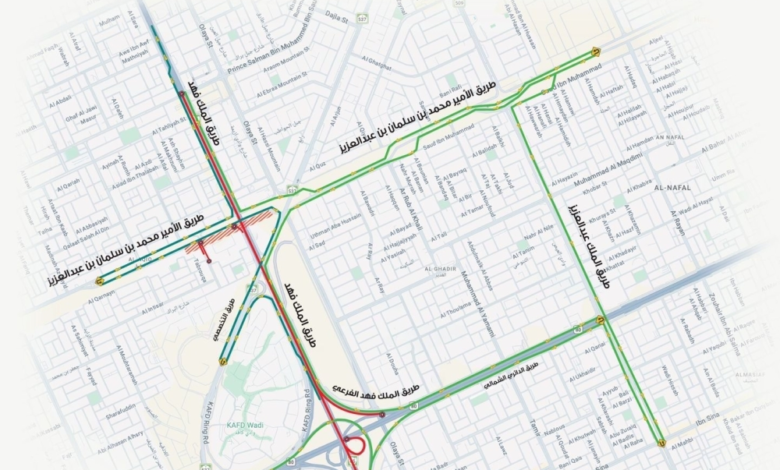
The Riyadh Sports Track project management announced a temporary and partial closure of one of the most vital arteries in the Saudi capital, King Fahd Road. This closure will specifically affect the area between the intersection of the Northern Ring Road and Prince Mohammed bin Salman bin Abdulaziz Road. Authorities have scheduled the closure for Saturday and Sunday, March 21st and 22nd, during the early morning hours from 5:00 AM to 9:00 AM. This temporary measure is necessary to remove high-voltage power pylons in the area, a crucial step in the construction and development work for the Riyadh Sports Track project.
Closure details and alternative routes
In its commitment to the safety and comfort of citizens and residents, the project management urged all users of King Fahd Road and motorists to follow the explanatory map published through official channels. It also emphasized the importance of using available alternative routes during the specified closure period to ensure smooth traffic flow and avoid any congestion that might occur as a result of these works. This prior coordination with traffic authorities reflects the professionalism in managing major projects within congested cities to guarantee the continuity of daily traffic without disruption.
The Sports Track Project: Historical Background and General Context
To understand the significance of this step, it's essential to consider the broader context and historical background of the Riyadh Sports Track project. This ambitious project is one of four major Riyadh developments launched by the Custodian of the Two Holy Mosques, King Salman bin Abdulaziz Al Saud, in March 2019. Spanning over 135 kilometers, the track connects Wadi Hanifa in the west of the capital to Wadi Al-Sulai in the east. The removal of the power pylons is part of a comprehensive plan to enhance the urban landscape, replacing overhead power lines with advanced underground networks. This will improve the city's aesthetics and open new avenues for urban and environmental development.
Strategic importance and expected impact
The Riyadh Sports Track project is of paramount importance and is expected to have a far-reaching impact. Locally, it represents a significant leap forward in the quality of life for Riyadh residents, aligning closely with the goals of the Kingdom's Vision 2030, overseen by His Royal Highness Crown Prince Mohammed bin Salman. The project aims to encourage a healthy and active lifestyle by providing safe and dedicated pedestrian paths, professional cycling routes, equestrian trails, and increased green spaces and diverse sports facilities.
At both the regional and international levels, the completion of such massive infrastructure projects reinforces Riyadh's position as one of the top 100 cities to live in globally. The Kingdom's commitment to developing a sustainable and environmentally friendly urban environment solidifies its image as a leader in comprehensive development. These projects also contribute to attracting foreign investment and revitalizing the tourism sector, thus supporting the national economy. Therefore, the temporary closure of King Fahd Road is simply a necessary executive measure paving the way for a bright and sustainable future for the Saudi capital, one that embodies all the meanings of progress and prosperity.