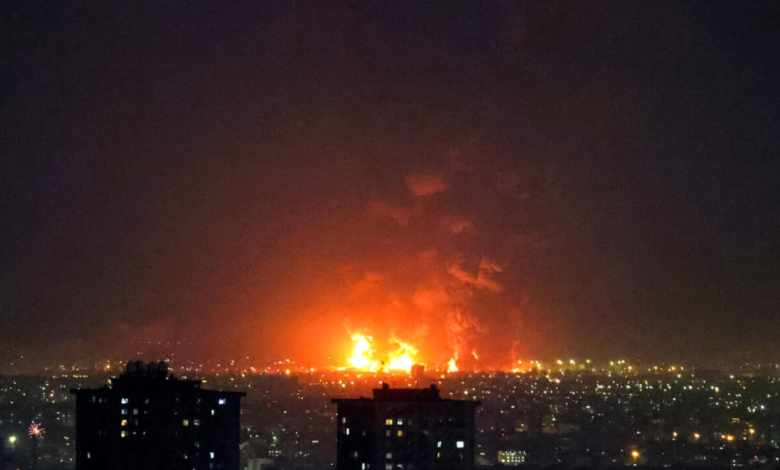

Iranian media, in a breaking news report carried by Al Arabiya, stated that airstrikes targeted missile sites belonging to the Iranian Revolutionary Guard in the coastal city of Bandar Abbas. This dangerous development comes amid escalating regional tensions and mutual warnings between Tehran on one side, and the United States and Israel on the other, signaling a new phase of military escalation in the Middle East.
The strategic importance of Bandar Abbas
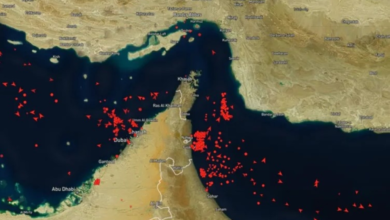
The city of Bandar Abbas holds immense strategic and geopolitical importance. Located in southern Iran, it directly overlooks the Strait of Hormuz, one of the world's most vital waterways for oil and energy trade. The city houses key military and naval bases belonging to the Iranian Revolutionary Guard Corps (IRGC), making it a crucial hub in Iran's defensive and offensive capabilities, particularly concerning its ballistic missile and drone program, which has raised international concerns. Targeting this area represents a significant shift in the target bank and portends repercussions that could impact maritime security in the Arabian Gulf.
Iranian diplomatic stance and Araqchi's statements
On the diplomatic and political front, and in the context of ongoing military tensions, Iranian Foreign Minister Abbas Araqchi made firm statements reflecting Tehran's official position. In a press interview published on Sunday, Araqchi asserted that the open confrontation and ongoing war between his country, the United States, and the Israeli occupation state will only end under clear and specific conditions.
The Iranian minister stressed that Tehran must be absolutely certain that such attacks and aggressions against its territory and interests will not be repeated. Araghchi stated explicitly: “This war will end when we are certain that it will not be repeated, and that compensation will also be paid.” This statement underscores Iran’s adherence to the principle of deterrence and its demand for compensation for the damage inflicted on its infrastructure.
Historical context and ongoing cycle of conflict
In his remarks, the Iranian Foreign Minister alluded to the recent historical context of the conflict, explaining the nature of the tit-for-tat attacks. He added, “We went through this experience last year: Israel attacked, then the United States joined them, and they regrouped and attacked us again.” These statements reflect an Iranian awareness of the pattern of military escalation that has come to characterize the regional landscape, where the years-long shadow war between Iran and Israel has transformed into direct and open confrontations.
Expected regional and international repercussions
Targeting Revolutionary Guard missile sites in a sensitive area like Bandar Abbas carries far-reaching consequences. Domestically, it poses a challenge to Iran's security apparatus. Regionally, it raises the level of alert among neighboring countries in anticipation of any retaliatory actions that could disrupt maritime traffic. Internationally, this continued escalation threatens the stability of global energy markets and presents the international community with complex diplomatic challenges to prevent the region from sliding into a full-blown regional war.