Rainfall in Saudi Arabia: Al-Ula records the highest amount among 7 regions

Weather forecast: Varying rainfall across the Kingdom
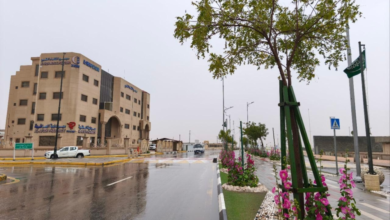
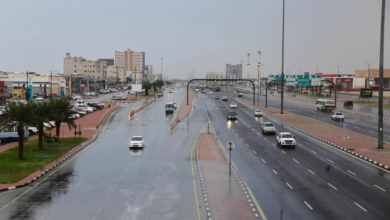
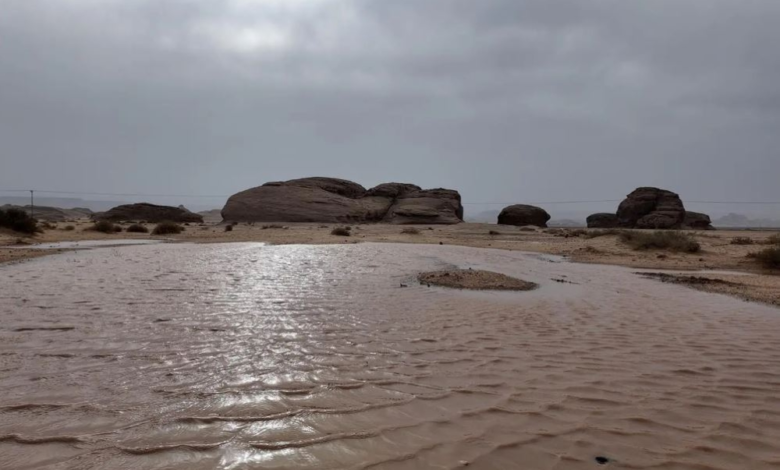
Over the past 24 hours, various regions across Saudi Arabia experienced thunderstorms with varying amounts of rainfall, bringing a refreshing wintery and spring-like atmosphere to several cities and governorates. Al-Ula Governorate in the Madinah region recorded the highest rainfall, with 9.2 mm in the village of Al-Dhalia. The three villages in Al-Ais recorded 8.4 mm, followed by Fadla in Al-Ula with 5.7 mm, and Al-Ula Airport with 3.5 mm. This reflects a significant concentration of rainfall in the western and northwestern parts of the Kingdom.
Ministry of Environment, Water and Agriculture Report
According to the daily report issued by the Ministry of Environment, Water and Agriculture, which monitors rainfall amounts across the Kingdom, 22 hydrological and climatological monitoring stations documented this weather event. The monitoring period covered the days from 9:00 AM on Saturday, March 15th, to 9:00 AM on Sunday, March 16th, and included the following regions: Riyadh, Madinah, Qassim, the Eastern Province, Tabuk, the Northern Borders, and Al-Jawf.
Distribution of rainfall amounts in the northern and eastern regions
The report provided detailed information on rainfall distribution. In the Al-Jawf region, Al-Jawf Airport recorded 4.0 mm, while Al-Shaqiq in Dumat Al-Jandal recorded 0.9 mm. In the Northern Borders region, the amount reached 2.5 mm in Al-Sha'bah in Rafha, 1.5 mm at Rafha Airport, and 1.2 mm at Arar Airport. In the Tabuk region, Al-Jahra Center in Tayma Governorate recorded 2.3 mm, the Juraysh Security Center in Tayma recorded 1.4 mm, and the city of Tayma recorded 1.0 mm.
In the Eastern Province, the report indicated that 1.6 mm of rainfall was recorded at Qaisumah Airport in Hafr Al-Batin, and 1.0 mm in Ras Mishab in Khafji. In the Hail region, 1.3 mm was recorded in Aqdah, and 0.5 mm in Baqaa. Rainfall also extended to the Qassim region, which recorded 1.1 mm in Al-Shamasiyah, 0.6 mm in Dakhna in Ar-Rass, and 0.5 mm in Shari in Buraydah. In the Riyadh region, 1.0 mm was recorded in the Al-Andalus neighborhood of Al-Ghat Governorate, and 0.9 mm in Nafi in Ad-Dawadmi.
The climatic and geographical context of rainfall in Saudi Arabia
Historically, Saudi Arabia is known for its arid desert climate for most of the year. However, transitional periods between seasons often see weather fluctuations that lead to thunderstorms. Topography plays a crucial role in the distribution of these rains. Al-Ula Governorate, which received the highest rainfall, is characterized by its mountainous terrain and unique rock formations that contribute to the formation of cumulonimbus clouds when moist air masses collide with them, thus explaining the greater rainfall there compared to flat areas.
Strategic importance and expected impact
These rains are of paramount importance on several levels. Locally and regionally , the rainfall contributes to replenishing the strategic groundwater reserves and supports the flow of wadis that feed the dams throughout the Kingdom. It also plays a vital role in revitalizing vegetation and natural pastures, which aligns directly with the objectives of the "Saudi Green Initiative" aimed at combating desertification and increasing green spaces.
From a tourism and economic , rainfall in global destinations like Al-Ula adds an exceptional aesthetic dimension that attracts tourists from both within the Kingdom and abroad. Temporary waterfalls form among the mountains, and the land is transformed into a lush green landscape, enhancing the ecotourism and winter tourism experience in the Kingdom. Relevant authorities, such as the National Center of Meteorology and Civil Defense, continue to closely monitor these conditions to ensure the safety of citizens and residents and to maximize the benefits derived from the rainfall.