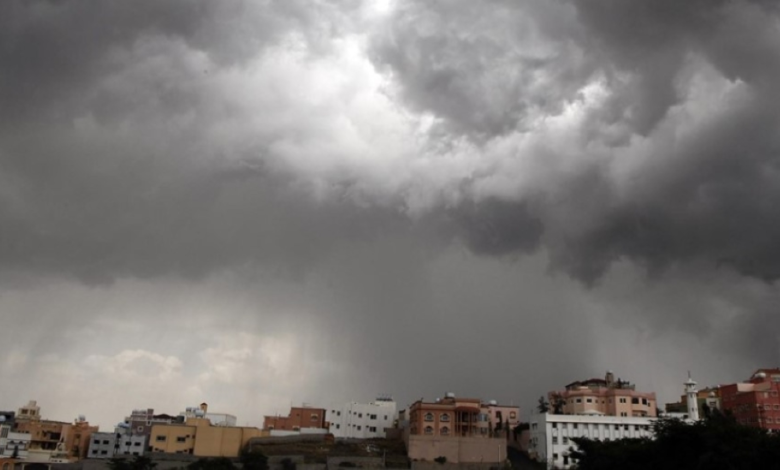

Introduction to the rainfall situation in the Kingdom
Several regions in Saudi Arabia recently experienced widespread rainfall, with the Ministry of Environment, Water and Agriculture issuing its daily report detailing the amounts. According to the report, these amounts were recorded across 104 hydrological and climatological monitoring stations distributed across 10 different regions over the past 24 hours, reflecting the comprehensive nature of the weather system and its broad impact on the Kingdom's geography.
General context and strategic importance of rainfall
These rainfalls are of paramount importance given the predominantly desert and semi-desert climate of the Arabian Peninsula. The Kingdom's government, as part of its Vision 2030 and the Saudi Green Initiative, places great emphasis on maximizing the utilization of rainwater and floodwater. This rainfall directly contributes to replenishing groundwater reservoirs and raising water levels in dams, in addition to its vital role in supporting the agricultural sector and combating desertification, thus positively impacting the local and regional environment.
Asir records the highest rates
The Asir region, known for its mountainous terrain and temperate climate, topped the list of regions with the highest rainfall, further solidifying its position as a leading tourist and agricultural destination. Details are as follows:
- Al-Shaaf in Abha Governorate: 46.2 mm.
- The crater in Balqarn: 35.1 mm.
- Abha Airport: 33.3 mm.
- Al-Asran in Sarat Abidah: 33.0 mm.
- Al Khalaf in Sarat Abidah: 32.4 mm.
- Wadi Dhahab in Abha: 28.0 mm.
- Radoum in Abha: 27.6 mm.
- Critical: 27.0 mm.
- The center of the Emirate of Al-Shaaf in Abha: 24.9 mm.
Rainfall amounts in Riyadh and the Eastern Province
In the Riyadh region, Al-Aflaj Governorate recorded the highest amount at 35.2 mm, followed by Al-Masane’ neighborhood in Riyadh at 14.0 mm, Al-Hair at 12.8 mm, King Abdullah Road in Al-Aflaj at 10.7 mm, Wadi Al-Dawasir Airport at 9.7 mm, and Layla in Al-Aflaj at 6.8 mm.
As for the Eastern Province, Al-Ahsa Airport recorded 27.0 mm, Al-Qadisiyah neighborhood in Dammam 21.6 mm, Al-Dughaimiyah village in Al-Khobar 18.4 mm, Al-Taraf in Al-Ahsa 14.6 mm, King Abdulaziz Air Base in Dhahran 14.2 mm, and Abqaiq 13.8 mm.
Rainfall monitoring in the rest of the Kingdom's regions
Rainfall extended to other areas as well, with Jazan recording 26.5 mm in Al-Dayer, 14.6 mm in Al-Haqou in Bish, and 1.8 mm in Al-Raith. In the Tabuk region, rainfall reached 20.0 mm in Rahib, 7.4 mm in Al-Zaytah in Haql, 5.4 mm on King Abdullah Road, and 4.2 mm at both Prince Sultan bin Abdulaziz Airport and the Shaqri Health Center.
The Najran region recorded 7.9 mm of rainfall in Badr Al Janoub, 2.8 mm in Al Namasah, 1.5 mm in Habuna, and 1.0 mm in Bir Askar. In Makkah, 4.6 mm was recorded in Kiyad, Al Qunfudhah. The Al Jawf region recorded 4.0 mm in Wa'lah, Tabarjal, 3.8 mm in Al Wataniyah Agricultural, and 0.7 mm at Al Jawf Airport. Finally, Al Baha recorded 0.8 mm in Baljurashi, while the Northern Borders region (Rafha and Rafha Airport) recorded 0.5 mm.
Expected impact and ongoing efforts
The accurate and continuous monitoring by the Ministry of Environment, Water and Agriculture reflects the technological advancements in the Kingdom's climate monitoring stations. This documentation not only serves statistical purposes but also forms a fundamental pillar in early warning systems, natural disaster management, and urban and agricultural planning. Furthermore, these rainfalls promise a bountiful agricultural season and support vegetation cover, which is essential for improving quality of life and reducing carbon emissions.