Riyadh recorded the highest rainfall; precipitation was recorded in 11 Saudi regions

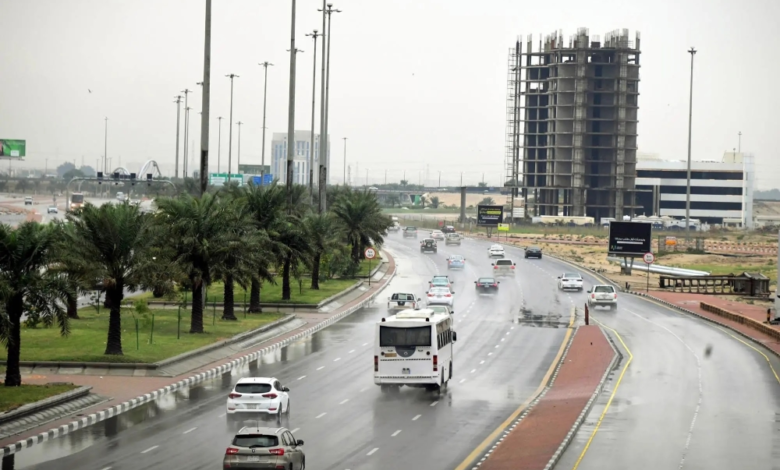
The Saudi Ministry of Environment, Water and Agriculture announced details of the rainfall that affected various regions of the Kingdom over the past 24 hours. The Ministry's hydrological and climatological monitoring network reported varying intensities of rainfall across 11 administrative regions. This announcement is part of the Ministry's ongoing and regular monitoring of climate changes and their impact on water resources and vegetation cover.
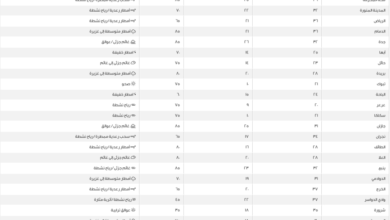
In detail, the Ministry's daily report indicated that 150 monitoring stations distributed throughout the Kingdom recorded rainfall amounts. The Riyadh region the list, recording the highest rainfall total, reaching 47.0 mm in the Al-Huraiq area of Shaqra Governorate. Rainfall in the Riyadh region was distributed as follows: 34.0 mm in the Kharoub farms of Shaqra and the Al-Andalus neighborhood of Al-Ghat, 28.0 mm in Shaqra city, 24.2 mm in the King Khalid Reserve, and 23.9 mm in Tamir, Al-Majma'ah. This bodes well for a good season to replenish surface groundwater in the central region.
Geographical variation in rainfall
The rainfall was not limited to the central region but extended to various geographical areas, reflecting the widespread nature of the weather system. In the Asir region , characterized by its mountainous terrain and rainy climate, the governorate of Rijal Alma'a recorded 41.0 mm of rainfall, Balsamar in Abha recorded 32.2 mm, and Haswa recorded 26.9 mm. This rainfall is a vital resource for the agricultural terraces and dams in the southern region, enhancing the sustainability of the natural vegetation for which Asir is renowned.
In the Eastern Province , coastal cities experienced significant rainfall, with Al-Qadisiyah district in Dammam recording 33.4 mm, Al-Dhabab and Jubail districts recording 28.5 mm, and King Fahd International Airport recording 26.8 mm. This rainfall helps to moderate the climate and wash away stagnant water, although it may pose challenges to stormwater drainage systems in urban areas.
Accurate and comprehensive monitoring of the remaining areas
Further to the report, stations in the Jazan region 20.4 mm of rainfall in the Border Guard Command area, while the Makkah region 11.6 mm in Sabt Al-Jarah in Al-Qunfudhah. Rain also fell in varying amounts in the Al-Baha, Al-Qassim, Northern Borders, Al-Jawf, Hail, and Tabuk regions, confirming the widespread nature of the rainfall event, which covered large parts of the north, south, and west of the Kingdom.
This precise data reflects the importance of the technological infrastructure possessed by the Ministry of Environment, Water and Agriculture, represented by its advanced monitoring stations that contribute to providing an accurate climate database. This data assists relevant authorities in planning water resource management, responding to emergencies, and supporting farmers and herders, especially in light of the Kingdom's focus on enhancing water security and developing vegetation cover within the Saudi Green Initiatives.