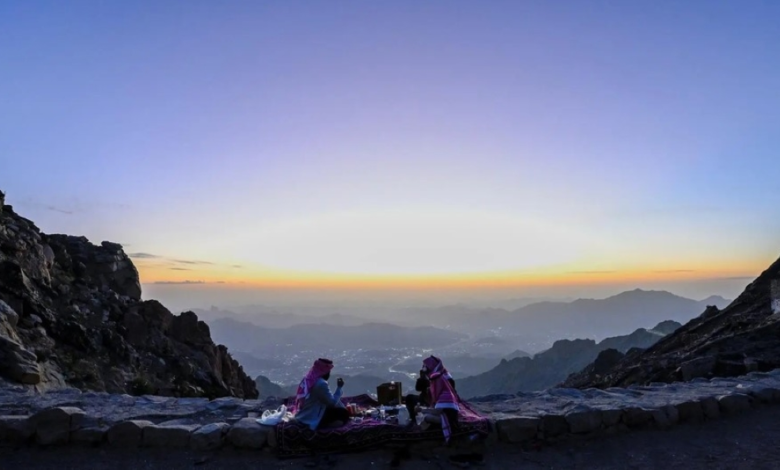

During the holy month of Ramadan, Taif, the jewel of Saudi Arabia's summer resorts, transforms into an exceptional destination for those fasting who seek tranquility and spirituality beyond the confines of their homes. Residents and visitors alike uphold an annual tradition of breaking their fast in open natural settings, taking advantage of the pleasant weather and captivating mountain scenery that characterize the region.
The magic of sunset in the Al-Hada highlands
As the Maghrib prayer time approaches, convoys of cars head towards the towering heights, specifically to the Al-Hada tourist center. Cameras captured scenes of Ramadan iftar from "Dakkah Al-Halwani," one of the highest peaks in Taif, where families and groups of friends spread out on the ground in simple, spontaneous gatherings. At this moment, the aroma of Saudi coffee mingles with the gentle breeze, while the sun paints a breathtaking sunset as it disappears behind the mountains, lending the iftar table a unique spiritual atmosphere, entirely different from the traditional iftar meal held indoors.
Geographical features: a refuge from the summer heat
This tradition gains momentum from Taif's unique geography, situated at an altitude ranging from 1700 to 2500 meters above sea level. This elevation grants the region a strategic climatic advantage, with temperatures being more moderate and cooler compared to other cities in the Kingdom, especially in the coastal and central regions. Therefore, going out to break the fast in the highlands is not merely a picnic, but an escape into the embrace of nature's coolness and an opportunity to enjoy the refreshing atmosphere that characterizes Ramadan nights in this mountainous area.
The scent of history in the mountain paths
The experience isn't limited to simply enjoying the weather; it extends to touching the region's rich history. The panoramic views offered by sites like "Dakka al-Halwani" overlook historic valleys and ancient trails, most notably the historic "Darb al-Jamala" and Wadi Nu'man. These sites were the lifeblood of trade and pilgrimage caravans for centuries. Today, those observing Ramadan are reviving these places, making breaking their fast beside them a way to connect the present with the past and contemplate the Creator's magnificence in the rugged mountain landscapes that humankind shaped long ago.
Strengthening social bonds
Many residents affirm that breaking the fast in the Taif highlands strengthens social bonds, as the open spaces offer a greater opportunity for connection away from the hustle and bustle of technology and the daily grind. The sight of tables scattered among the rocks and trees reflects an authentic Ramadan tradition in Saudi Arabia, where the place becomes part of the collective memory, and nature transforms into a grand Ramadan gathering that unites hearts as well as bodies.