Eastern Province: Strengthening the role of the private sector to address environmental challenges

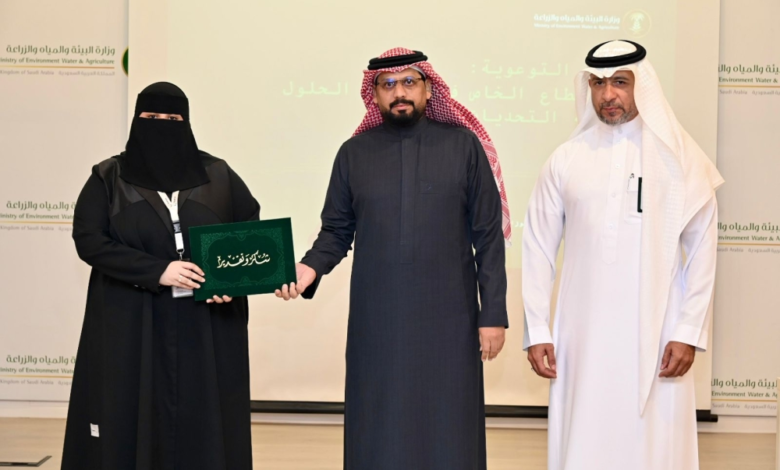
In a move reflecting the Kingdom of Saudi Arabia's commitment to promoting environmental sustainability, the Eastern Province branch of the Ministry of Environment, Water and Agriculture, represented by its Environment Department, held a strategic awareness seminar entitled "The Role of the Private Sector in Providing Solutions to Address Environmental Challenges." This seminar comes at a time when the region is witnessing major shifts towards a green economy, in line with the objectives of the Kingdom's Vision 2030.
National context and strategic importance
This symposium is of particular importance given the industrial and economic nature of the Eastern Province, a major industrial hub in the Kingdom. These initiatives are part of the ongoing national efforts to implement the "Saudi Green Initiative," which aims to reduce carbon emissions and increase vegetation cover. The symposium addressed the most prominent environmental challenges facing the region, emphasizing that the responsibility no longer rests solely with government entities, but requires a genuine and effective partnership with the private sector to develop sustainable solutions.
The private sector: From implementation to strategic partnership
During the symposium, Engineer Fahd Al-Hamzi, Director General of the Ministry of Environment, Water and Agriculture's Eastern Province branch, emphasized the pivotal role of the private sector in addressing climate change, air and soil pollution, and biodiversity loss. Al-Hamzi pointed out that food security is a cornerstone of national security, requiring concerted efforts to develop strategies that leverage the Kingdom's comparative advantages and transform environmental challenges into promising investment opportunities.
Promoting community environmental awareness
For his part, Engineer Akram Al-Marhoun, Director of the Environment Department at the Ministry's branch, explained that such events directly contribute to raising environmental awareness among individuals and institutions. He added that the worsening of environmental crises globally has made knowledge an essential tool for building sustainable environmental awareness, which fosters a sense of social responsibility and encourages the adoption of behaviors that preserve natural resources for future generations.
The road to zero neutrality 2060
The symposium's scientific sessions featured presentations by Asayel Al-Otaibi and Salem Al-Hashem, focusing on the concept of the "carbon footprint" as an accurate measure of human impact on the planet. Discussions addressed how to align corporate strategies with the Kingdom's international commitments, specifically the goal of achieving net-zero carbon emissions by 2060. This goal represents a historic commitment reflecting the Kingdom's desire to lead the green era in the region, requiring companies to adopt clean technologies and reduce emissions to ensure the continuity of their operations and their contribution to the national economy.
Innovation and environmental transparency
In the second lecture, Noura Al-Qahtani highlighted the concept of environmental sustainability in the Saudi context, emphasizing the private sector's role in developing technological solutions that enhance environmental transparency. The seminar concluded by affirming that the private sector has moved beyond simply implementing regulations, becoming a strategic partner in environmental decision-making, knowledge transfer, and accelerating the widespread adoption of green solutions, thus contributing to improved quality of life and societal well-being.