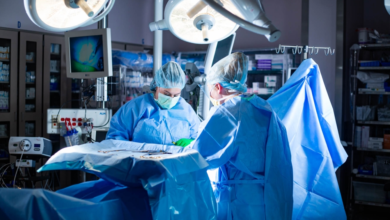
Successful gallbladder removal surgery for a 174 kg patient at Al-Diriyah Hospital

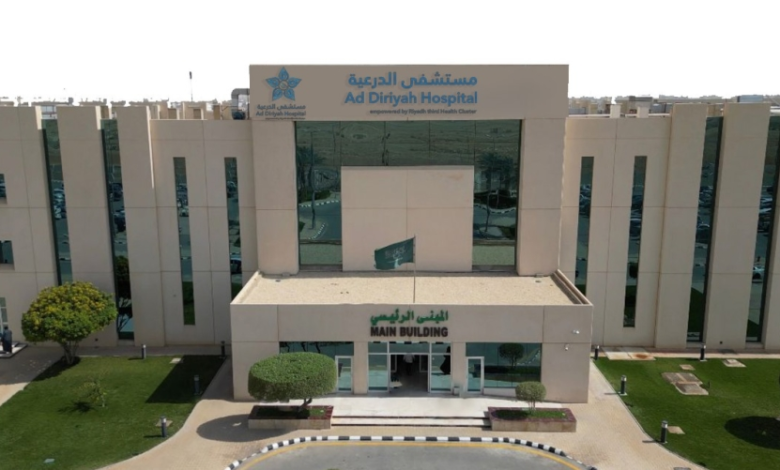
The medical team at Al-Diriyah General Hospital, one of the components of the Third Riyadh Health Cluster, recorded a remarkable medical achievement by ending the suffering of a thirty-year-old patient suffering from extreme obesity with a weight exceeding 174 kilograms, through performing a delicate operation to remove the gallbladder using surgical laparoscopy, thus ending a long journey of pain and serious health complications.
Details of the critical case and medical challenge
The patient arrived at the emergency department in a very critical health condition, as medical examinations revealed the presence of gallstones that had led to a blockage of the bile ducts, causing acute inflammation of the pancreas and a high level of jaundice in the blood, a condition that poses a direct threat to life if it is not dealt with quickly and efficiently.
Dr. Mohammed Al-Harbi, a consultant in obesity and endoscopic surgery, explained that the biggest challenge in this case was not limited to the inflammation alone, but rather in dealing with the body mass index, which reached 72 kg/m², a rate classified as extreme obesity, which makes anesthesia and traditional surgical intervention risky and requires special equipment and high surgical skill to reach the internal organs through the dense layers of fat.
Advanced surgical techniques to overcome the risks of obesity
Bariatric surgery is considered one of the most complex procedures in the field of surgery, due to the difficulty of visualizing the abdominal cavity and the pressure of fat on vital organs. To overcome these obstacles, the medical team resorted to using minimally invasive laparoscopic techniques, performing the operation through four microscopic incisions, each no more than one centimeter long.
This modern medical approach greatly reduces the likelihood of post-operative complications such as wound infection or surgical hernia, and also contributes to accelerating the healing process, which is considered a gold standard in modern surgeries for heavy cases.
Clinical results and rapid recovery
Thanks to the precision of the medical intervention, the patient showed an immediate response to treatment, with the procedure being a complete success without any significant complications. The patient regained her ability to eat normally the day after surgery, a strong indicator of the procedure's success and the return of normal digestive function.
The patient left the hospital in good health, after all her vital signs stabilized and the jaundice and chronic pain that had accompanied her for a long time disappeared, reflecting the efficiency of the medical care provided in the treatment and recovery phases.
The impact of this achievement on the health sector and Vision 2030
This success is not just an individual case, but reflects the qualitative development witnessed by the health sector in the Kingdom of Saudi Arabia, specifically in the ability of general and peripheral hospitals to perform complex specialized operations that previously required referral to major central medical centers.
This achievement is consistent with the objectives of the Health Sector Transformation Program within the Kingdom’s Vision 2030, which aims to facilitate access to health services, improve their quality and efficiency, and enhance the capabilities of health clusters in various regions to deal with complex cases with qualified national personnel and global technologies.