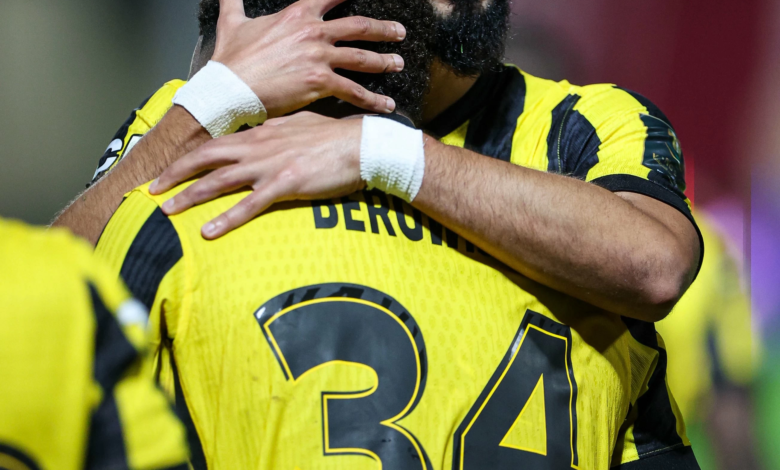
Reasons for Al-Ittihad's defeat against Al-Kholoud in the King's Cup | Comprehensive analysis

Introduction: A spherical earthquake strikes the corridors of the Dean
The night Al-Ittihad was eliminated from the King's Cup semi-finals was more than just a fleeting loss in the annals of Saudi football; it was a shock to the fans and a resounding technical collapse that raised questions about the team's future. In this context, sports expert Marwan Al-Mohsen, in an exclusive interview with Okaz newspaper, provided a comprehensive analysis unraveling the mysteries of this bitter exit against Al-Kholoud. He emphasized that the result was not a coincidence or a mere fluke, but rather the culmination of accumulated technical and mental factors that combined to bring down "Al-Ameed" (Al-Ittihad's nickname) in one of the season's most crucial tests.
Historical context and importance of the King's Cup tournament
The King's Cup is considered the most prestigious domestic tournament in Saudi Arabia, and it is characterized by fierce competition. Al-Ittihad, one of the oldest and most established Saudi and Asian clubs with a massive fan base, always enters this tournament with its sights set on the title. The team's exit in the semi-finals represents a significant blow to the ambitions of the management and fans, and directly impacts the team's chances in future regional and continental competitions, thus increasing the pressure on the entire organization.
5 main reasons behind the fall of the Union
1. Lack of seriousness and fighting spirit
Al-Muhsin explained that the most significant factor in this failure was the lack of seriousness among some players. The team did not display the focus and tactical discipline befitting a crucial knockout match. This complacency and insufficient appreciation of the importance of the encounter gave Al-Kholoud a psychological and tactical advantage from the opening minutes, making a comeback extremely difficult.
2. Coach Conceição's tactical confusion
The inconsistency in coach Conceição's tactical approach played a pivotal role in the team's decline. The starting lineup lacked the necessary balance, and a clear lack of cohesion in executing tactical roles between the defense, midfield, and attack was evident. Furthermore, there was a significant slowness in reacting to the flow of the game, with substitutions coming late and proving ineffective, thus depriving the team of its tactical identity, particularly during rapid transitions between attack and defense.
3. Psychological fragility in critical moments
Regarding penalty kicks, which demand a high level of emotional stability, Al-Mohsen noted that Moussa Diaby's mental state was evident before he took the kick. The tension he displayed directly affected his focus and the accuracy of his shot. In such crucial matches, mental readiness is never less important than technical skill.
4. Goalkeeping standards have declined
Goalkeeper Rajkovic was not at his best, failing to live up to expectations in such a crucial match. In cup competitions, the goalkeeper is often half the team, and Rajkovic was expected to perform at a higher level to save his team in critical moments, which he did not.
5. The gap between expectations and reality (mass shock)
The analysis touched upon a crucial point concerning the reaction of the Al-Ittihad fans. The shock and frustration experienced by the supporters were a natural consequence of the absence of the club's renowned fighting spirit and determination. While passionate fans might accept a loss if it comes after a hard-fought battle, they absolutely refuse to surrender on the pitch, thus widening the gap between the fans' aspirations and the players' performance.
Conclusion: A comprehensive review is needed
Marwan Al-Mohsen concluded his analysis with an important message to the club's management, stressing the need to analyze this loss deeply and objectively, avoiding superficial or emotional reactions. Great clubs are built on a delicate balance between technical, physical, and mental aspects. While Al-Ittihad possesses the fundamental elements for success, it urgently needs a comprehensive review to reorganize its strategy and restore the competitive identity and fighting spirit that has always distinguished the "Tigers" in crucial matches, both domestically and internationally.