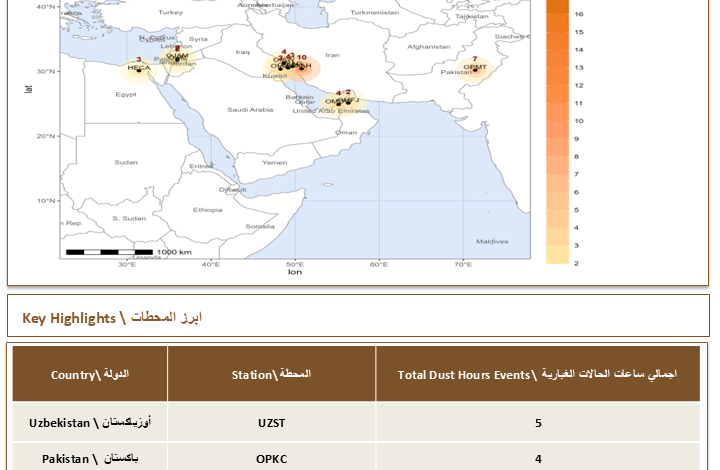

أعلن المركز الإقليمي للعواصف الغبارية والرملية عن رصده 29 ساعة من الحالات الغبارية المتفرقة في دول الإقليم خلال يوم الثلاثاء الموافق 2 يونيو 2026، وذلك ضمن جهوده المستمرة لمتابعة الظواهر الجوية وتأثيراتها. ووفقًا للبيانات الصادرة عن المركز، تركزت هذه الحالات بشكل كبير في مناطق آسيا الوسطى والشرق الأوسط، مما يسلط الضوء مجددًا على التحديات البيئية والمناخية التي تواجه هذه المناطق الحيوية من العالم.
توزيع جغرافي للظواهر الغبارية
أوضح التقرير اليومي للمركز أن جمهورية أوزبكستان سجلت النصيب الأكبر من ساعات الغبار بواقع 12 ساعة، مما يجعلها الدولة الأكثر تأثرًا خلال فترة الرصد. وتلتها الجمهورية الإسلامية الإيرانية التي سجلت 8 ساعات من الحالات الغبارية، ثم جمهورية باكستان الإسلامية بـ7 ساعات، بينما سجلت تركمانستان ساعتين. وأشار المركز إلى أنه لم يتم تسجيل أي حالات غبارية في بقية دول الإقليم خلال نفس الفترة، مؤكدًا على استمرارية عمليات الرصد والتحليل لدعم جهود الإنذار المبكر وتعزيز الجاهزية الإقليمية.
ما وراء تزايد الحالات الغبارية في المنطقة؟
تُعد العواصف الغبارية والرملية ظاهرة طبيعية شائعة في المناطق القاحلة وشبه القاحلة التي تشكل جزءًا كبيرًا من جغرافية الإقليم، والذي يقع ضمن ما يُعرف بـ “حزام الغبار” الممتد من شمال أفريقيا عبر الشرق الأوسط وصولًا إلى آسيا الوسطى. وتتفاقم هذه الظاهرة بفعل مجموعة من العوامل الطبيعية والبشرية، أبرزها التغيرات المناخية التي تؤدي إلى ارتفاع درجات الحرارة وزيادة معدلات الجفاف. كما يلعب تدهور الأراضي، والتصحر، والممارسات الزراعية غير المستدامة، بالإضافة إلى جفاف المسطحات المائية مثل بحر آرال، دورًا محوريًا في زيادة وتيرة وشدة هذه العواصف، مما يجعل التربة الجافة والمفككة مصدرًا سهلًا للغبار الذي تحمله الرياح لمسافات شاسعة.
التأثيرات الصحية والبيئية للعواصف الترابية
لا تقتصر آثار العواصف الغبارية على تدني مدى الرؤية الأفقية، بل تمتد لتشكل تهديدًا مباشرًا على الصحة العامة والقطاعات الاقتصادية الحيوية. فعلى الصعيد الصحي، يمكن لجزيئات الغبار الدقيقة أن تخترق الجهاز التنفسي مسببةً أمراضًا مثل الربو والحساسية والتهاب الشعب الهوائية، كما تؤثر سلبًا على مرضى القلب. اقتصاديًا، تؤدي هذه الظواهر إلى شل حركة النقل الجوي والبري، وتلحق أضرارًا بالبنية التحتية والمحاصيل الزراعية، وتزيد من تكاليف الصيانة والتشغيل في مختلف القطاعات. لذلك، تكتسب جهود الرصد والإنذار المبكر التي يقوم بها المركز الإقليمي أهمية قصوى في تمكين الدول من اتخاذ الإجراءات الوقائية اللازمة للحد من هذه الآثار السلبية وحماية الأرواح والممتلكات.