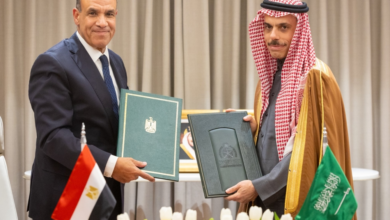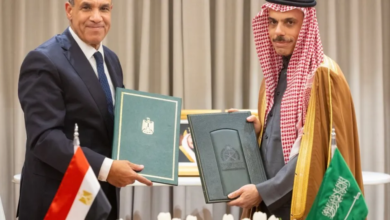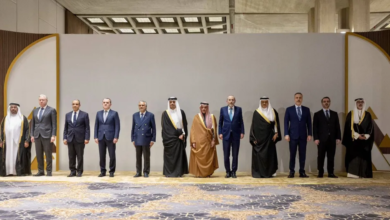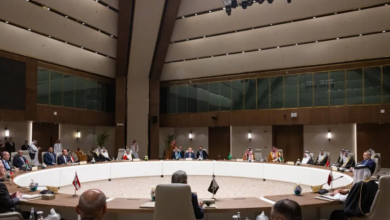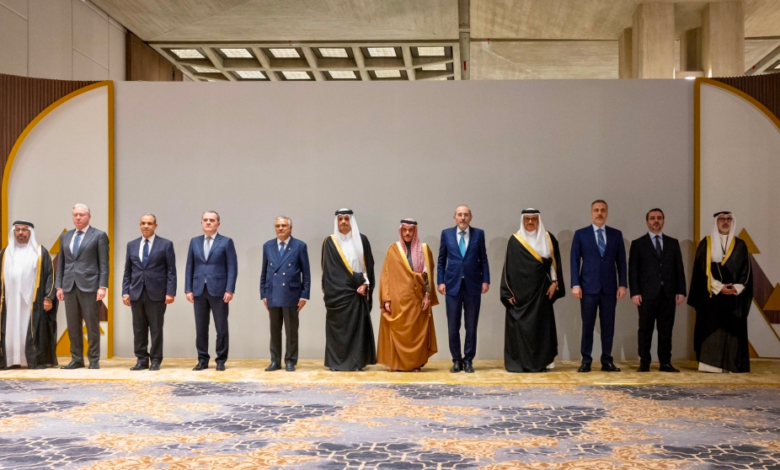

In a decisive diplomatic move reflecting regional consensus on security challenges, the Saudi capital, Riyadh, hosted a significant consultative ministerial meeting on Wednesday, March 18, 2026. The Arab-Islamic meeting in Riyadh the foreign ministers of Saudi Arabia, Egypt, Jordan, the United Arab Emirates, Qatar, Kuwait, Bahrain, Oman, Azerbaijan, Lebanon, Pakistan, Syria, and Turkey. Discussions focused on the repercussions of ongoing Iranian aggression and its direct impact on the national security of the region's countries and international maritime navigation.
General context and historical background of regional tensions
This ministerial summit comes amidst highly sensitive geopolitical complexities in the Middle East. Historically, the region has suffered from the repercussions of foreign interventions and the support of armed militias operating outside the framework of the nation-state. In recent years, the strategy of relying on drones and ballistic missiles as tools of military pressure has emerged, as previously demonstrated in attacks targeting vital installations and shipping lanes. This tense historical context has compelled Arab and Islamic states to formulate a unified and firm stance to protect their sovereignty and the resources of their people, and to activate diplomacy as a fundamental means of resolving crises.
Strong condemnation of the targeting of infrastructure and civilians
During the meeting, the ministers discussed at length the series of Iranian attacks targeting the Gulf Cooperation Council (GCC) countries, Jordan, Azerbaijan, and Turkey. They issued a statement strongly condemning these deliberate attacks. These attacks included the direct targeting of populated residential areas and vital civilian infrastructure essential for the stability of societies, including oil facilities, desalination plants, civilian airports, and diplomatic missions.
Those present stressed that these actions constitute a flagrant violation of international laws and norms, emphasizing that they cannot be justified under any pretext. In this context, the inherent and legitimate right of states to defend themselves and protect their territories and citizens was reaffirmed, based on Article 51 of the Charter of the United Nations, which guarantees the right of self-defense.
The importance of the event and its expected impact on international security
The importance of this meeting extends beyond the regional dimension to encompass the entire global economy. The participants called on Iran to immediately cease all forms of escalation and adhere to the principles of good neighborliness and international humanitarian law. The international significance of this stance is underscored by the explicit demand to halt any threats aimed at closing or obstructing international navigation in the Strait of Hormuz, or threatening maritime security in the strategic Bab el-Mandeb Strait. The stability of these waterways is fundamental to ensuring the flow of global energy supplies and preventing international economic crises.
Conditions for building stable future relationships
The ministers established clear parameters for the future of relations with Tehran, emphasizing that these relations must be based on mutual respect for the sovereignty of states and non-interference in their internal affairs. The meeting called on Iran to comply with UN Security Council Resolution 2817 (2026) and to immediately cease all provocative actions. It also stressed the need to stop funding and arming its affiliated militias in Arab countries, which are used as proxies to serve objectives that conflict with the national interests of those countries.
Supporting Lebanon's sovereignty and condemning Israeli aggression
In the context of comprehensive regional security, the meeting devoted significant time to discussing the situation in Lebanon. The ministers reaffirmed their unwavering support for the security, stability, and territorial integrity of Lebanon. They called for the full exercise of Lebanese sovereignty over all its national territory and declared their support for the Lebanese government's decisions aimed at consolidating the use of force under state control. The participants also strongly condemned the Israeli aggression against Lebanon, warning of the dangers of Israel's expansionist policies in the region.
At the conclusion of the summit, the participating countries pledged to continue intensive coordination and consultation to monitor developments and assess emerging issues to ensure that all legitimate measures are taken to protect their national security and stop any malicious attacks targeting their stability.