The Foreign Minister discusses regional developments with his Pakistani counterpart

Details of the telephone call between the two foreign ministers
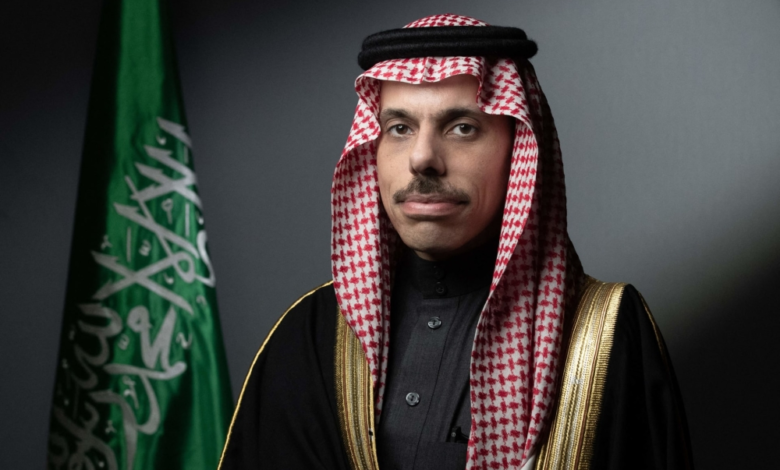
His Royal Highness Prince Faisal bin Farhan bin Abdullah, the Saudi Minister of Foreign Affairs, received an important telephone call from His Excellency Muhammad Ishaq Dar, Deputy Prime Minister and Minister of Foreign Affairs of the Islamic Republic of Pakistan. During this strategic call, they discussed the latest developments in the current regional situation, in addition to a comprehensive review of joint efforts aimed at restoring security and stability to the region and sparing its people the ravages of escalation and tensions.
The historical context of Saudi-Pakistani relations
The relationship between the Kingdom of Saudi Arabia and the Islamic Republic of Pakistan is based on solid historical foundations and deep roots of Islamic brotherhood and cooperation across various fields. Over the decades, this relationship has served as a model of solidarity and strategic cooperation, with the two countries standing shoulder to shoulder in confronting regional and international challenges. Pakistan is considered a strategic ally of the Kingdom, while Islamabad views Riyadh as a key supporter and a center of Islamic, political, and economic influence. This cooperation has manifested itself in numerous agreements and partnerships encompassing political, economic, and military aspects, reflecting the commitment of both leaderships to strengthening and developing this historic alliance in a way that serves the interests of both brotherly nations.
The importance of joint coordination in light of regional challenges
These telephone conversations come at a critical juncture, as the Middle East and South Asia witness rapid transformations and complex security and political challenges. Continued coordination between Riyadh and Islamabad is of paramount importance for unifying visions and positions on critical issues. Saudi Arabia, as the leader of the Islamic world and chair of the Islamic Summit, plays a pivotal role in leading efforts to de-escalate tensions and promote dialogue to resolve conflicts peacefully. For its part, Pakistan represents a significant demographic and military force in the Islamic world, making a convergence of views between the two countries an urgent necessity to ensure regional stability and prevent further descent into chaos.
The expected impact of the talks at the regional and international levels
At the regional level, these consultations contribute to strengthening Islamic solidarity, particularly under the umbrella of the Organization of Islamic Cooperation, to confront successive crises and support the just causes of the Muslim world. Furthermore, the exchange of views on efforts to restore security and stability sends reassuring messages to the peoples of the region and underscores that diplomatic solutions are the best option for overcoming current crises.
On the international level, the Saudi-Pakistani agreement strengthens the international community's efforts to establish peace, secure maritime routes, and ensure the stability of global energy markets. Stability in the Middle East region has a positive impact on the global economy, which aligns with the Sustainable Development Goals that seek to create a prosperous and stable regional environment that supports shared economic growth for all countries in the region and the world.