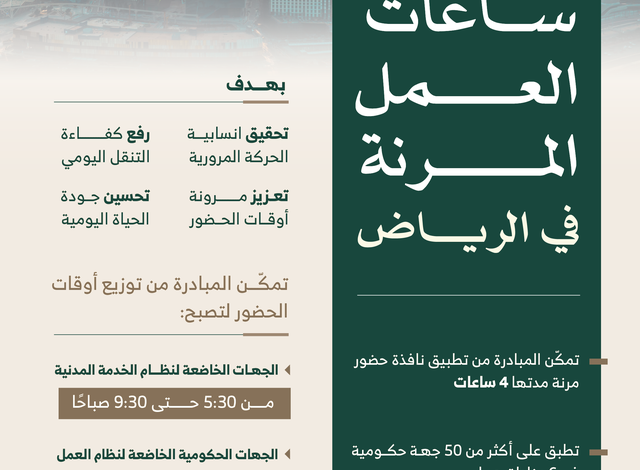

في خطوة استراتيجية تهدف إلى تعزيز انسيابية الحركة المرورية في العاصمة، أعلنت الهيئة الملكية لمدينة الرياض، بالشراكة مع وزارة الموارد البشرية والتنمية الاجتماعية، عن إطلاق مبادرة ساعات العمل المرنة. تستهدف المبادرة، التي انطلقت في الثاني من يونيو 2024، تخفيف التكدس المروري ورفع كفاءة التنقل الحضري في أوقات الذروة، مما يمثل حلاً مبتكراً لأحد أبرز التحديات التي تواجه المدن الكبرى عالمياً.
تأتي هذه المبادرة في سياق النمو المتسارع الذي تشهده مدينة الرياض كجزء من مستهدفات رؤية السعودية 2030، والتي حولت العاصمة إلى مركز اقتصادي واستثماري عالمي جاذب للكفاءات والشركات. هذا التوسع العمراني والسكاني الهائل أدى بطبيعة الحال إلى زيادة الضغط على البنية التحتية للطرق، مما جعل من الاختناقات المرورية تحدياً يومياً يؤثر على جودة حياة السكان والإنتاجية العامة. ومن هنا، برزت الحاجة إلى حلول تنظيمية ذكية تتجاوز الحلول التقليدية المتمثلة في توسعة الطرق، لتتكامل مع مشاريع النقل العام الضخمة مثل “قطار الرياض”.
آلية تطبيق ساعات العمل المرنة وتأثيرها
تشمل المرحلة الحالية من المبادرة أكثر من 50 جهة حكومية وخاصة تتوزع على ستة مواقع عمل حيوية تشهد كثافة مرورية عالية، وهي: مركز الملك عبد الله المالي (كافد)، والمدينة الرقمية، وحي السفارات، وليسن فالي، وغرناطة بزنس، وواجهة روشن. ترتكز فكرة المبادرة على توزيع أوقات حضور وانصراف الموظفين على نافذة زمنية ممتدة تصل إلى أربع ساعات متصلة، بدلاً من تركيزها في ساعة واحدة.
ووفقاً للتنظيم الجديد، تم تحديد مواعيد تطبيق ساعات العمل المرنة للجهات الخاضعة لنظام الخدمة المدنية لتبدأ من الساعة 5:30 صباحاً حتى 9:30 صباحاً، بينما تمتد مواعيد الحضور للجهات الحكومية الخاضعة لنظام العمل من الساعة 7:00 صباحاً حتى 11:00 صباحاً. هذا التوزيع الزمني يهدف إلى “تسطيح” منحنى الذروة المرورية، مما يقلل من عدد المركبات على الطرق في نفس اللحظة ويحسن من تدفق حركة السير بشكل ملحوظ.
أبعاد استراتيجية لتعزيز جودة الحياة والإنتاجية
لا يقتصر تأثير هذه المبادرة على الجانب المروري فحسب، بل يمتد ليشمل أبعاداً اجتماعية واقتصادية هامة. فعلى صعيد الموظفين، يمنحهم هذا الإجراء التنظيمي مرونة أوسع لاختيار أوقات عملهم بما يتناسب مع ظروفهم الشخصية، الأمر الذي يساهم في تحقيق توازن أفضل بين الحياة المهنية والشخصية، ويعزز من جودة الحياة والرضا الوظيفي. كما أن تقليل الوقت المهدر في الازدحامات المرورية ينعكس إيجاباً على الصحة النفسية والجسدية للموظفين ويزيد من إنتاجيتهم.
وأكدت الجهات المعنية أن هذا التنظيم يقتصر على الوظائف الإدارية ذات الجداول الزمنية الثابتة لضمان فعالية القرار، مع استثناء القطاعات الحيوية التي تتطلب طبيعة عملها استمرارية التشغيل وتقديم الخدمات دون انقطاع، وفي مقدمتها قطاعا الصحة والتعليم العام، بالإضافة إلى الوظائف الميدانية والتشغيلية. وتندرج هذه الخطوة ضمن منظومة متكاملة من الحلول التي تعمل عليها الهيئة الملكية لصناعة بيئة حضرية مستدامة وأكثر كفاءة، تماشياً مع مكانة الرياض كواحدة من أسرع مدن العالم نمواً وتطوراً.