Ronaldo and the teacher's bisht: A story of Saudi heritage that amazed the world

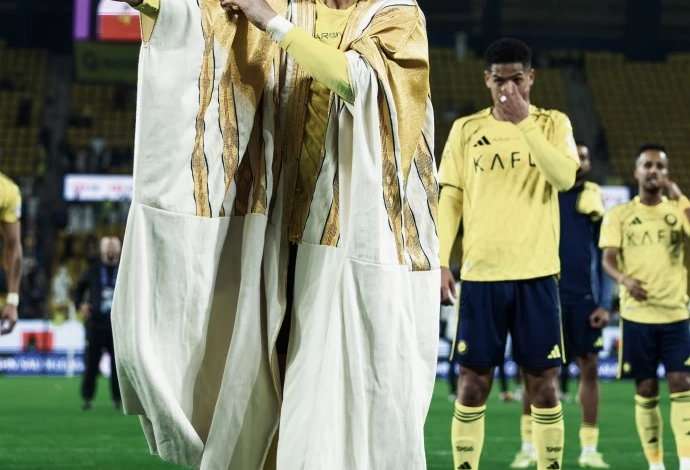
In an extraordinary cultural display that transcended the boundaries of the football pitch, Portuguese star Cristiano Ronaldo stole the show during Saudi Arabia's National Day celebrations when he appeared wearing traditional Saudi attire, complete with the luxurious "bisht" (cloak) of a female teacher. This appearance was more than just a fleeting celebratory gesture; it instantly transformed into a global event, bringing a piece of Saudi heritage from the realm of local tradition to the forefront of fashion and international attention, visually redefining Saudi identity for millions of viewers worldwide.
The teacher's cloak: Al-Ahsa's historical heritage
The “Al-Muallima” bisht worn by Ronaldo is one of the finest and most prestigious types of Al-Ahsa bishts, for which the Al-Ahsa region in eastern Saudi Arabia is renowned. This unique piece is distinguished by being a purely handmade product, passed down through generations of artisan families in Al-Ahsa. The bisht's creation relies on traditional hand-weaving techniques using a loom, requiring considerable time and effort. It is embroidered with gold and silver “zari” threads with exceptional skill, giving it high symbolic and material value. The design incorporates profound environmental references drawn from the palm tree and the oasis, reflecting the authentic Arab style in the attire of leaders and dignitaries.
A historical depth that extends back to King Faisal
This type of bisht is not merely a contemporary garment; it carries deep historical and political significance in Saudi Arabia. Historical records document that King Faisal bin Abdulaziz – may God have mercy on him – wore the same type of bisht (the "mu'allama") during his famous historic trip to Britain in 1919, when he was fourteen years old. At that moment, King Faisal presented the Saudi attire as a symbol of the nascent Saudi state's identity to the British Empire and the world, thus establishing a strong connection between the bisht and the Kingdom's diplomatic and cultural representation on the international stage.
The Ronaldo effect: The global markets' response
The reappearance of the “Don” has revived this cultural symbol with tremendous force, eliciting an immediate response from global markets. Reports indicate a rapid surge in activity from major Chinese retailers, as well as British and American fashion platforms, which quickly began offering replicas of the men's cloak or “Al-Muallima” bisht. These imitations and inspired versions ranged in price from $5,500 to $13,000 per piece. Despite their high prices, these international models merely replicate the outward appearance, failing to achieve the quality of authentic Al-Ahsa craftsmanship or the intricate details of the hand-embroidered zari that characterize the genuine bisht.
The actual value of handicrafts
In contrast, the true value of the handcrafted bisht from Al-Ahsa, the luxury version worn by Ronaldo, is highlighted. The original piece is valued at over 80,000 Saudi riyals (approximately $21,000 USD). This high price is due to the long hours of handcrafting, which can extend over months, the quality of the natural materials used, and the intrinsic value of the craftsmanship associated with it—a craft that industrial machines cannot replicate with the same spirit and precision.
This event has proven that the traditional Saudi industry is capable of asserting its presence in the international fashion market when it is linked to history and identity, and finds someone to present it to the world as a symbol of cultural elegance and leadership.