Rubio: Washington will cooperate with Venezuelan leaders on one condition after Maduro

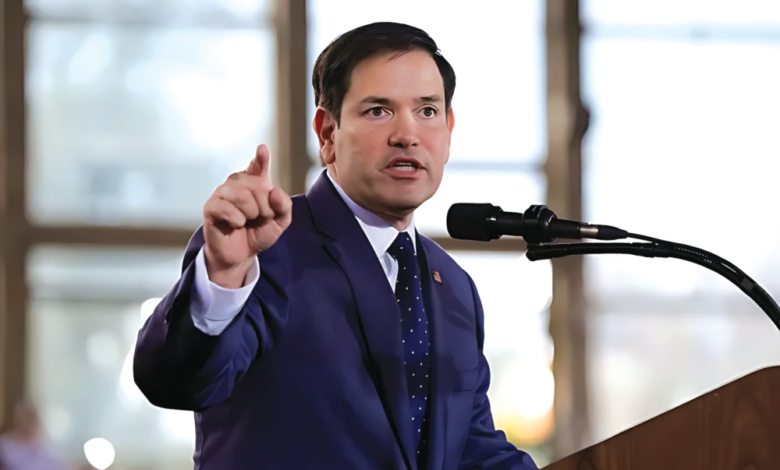
US Secretary of State Marco Rubio confirmed on Sunday that the United States is conditionally prepared to cooperate with the remaining leaders in power in Venezuela, following the surprise US military operation that led to the ouster and arrest of President Nicolás Maduro. Rubio clarified that the basis for this cooperation depends entirely on these leaders making what he termed "the right decision" at this critical juncture.
In an interview with CBS News, Rubio emphasized that the future U.S. position is not a blank check, but will be shaped by the actions of those remaining in power in Caracas. "We will be watching their actions closely, and our position will be determined by what they do," he said. He added, warning that Washington retains a wide range of effective leverage tools that it will not hesitate to use if a path toward democratic transition and stability is not chosen.
Context of tension and strained relations
These rapid developments culminate years of estrangement and diplomatic tension between Washington and Caracas. Since the rise of Chavismo and later the rule of Nicolás Maduro, the United States has imposed a series of harsh economic sanctions on Venezuela's oil sector and prominent government figures, accusing the regime of undermining democracy and violating human rights. Venezuela, which possesses the world's largest oil reserves, has experienced an unprecedented economic collapse, resulting in hyperinflation and the exodus of millions of its citizens to neighboring countries and the United States, making the Venezuelan issue a top priority in US foreign policy in the Western Hemisphere.
International reactions and geopolitical clash
Internationally, the event provoked mixed reactions reflecting global geopolitical divisions. China, Venezuela's strategic ally and main creditor, was quick to condemn the US operation in the strongest terms. In an official statement, the Chinese Foreign Ministry demanded the "immediate release" of President Nicolás Maduro and his wife, calling on Washington to guarantee their personal safety and cease what it termed the "overthrow of the Venezuelan government." China asserted that the US action constituted a "clear violation of international law" and the principles of the UN Charter.
Expected impacts and the future of energy
This dramatic shift in the Venezuelan landscape has far-reaching implications that extend beyond its borders. Regionally, the regime change could reshape alliances in Latin America, particularly with countries that were once aligned with the Bolivarian Alliance. Internationally, attention is focused on energy markets; political stability and the formation of a new, internationally recognized government could lead to the lifting of US sanctions, allowing Venezuelan oil to flow freely back into global markets. This could directly impact oil prices and OPEC's strategies in the near future.