A Russian gas tanker sank off the coast of Libya, prompting accusations against Ukraine

The Mediterranean Sea witnessed a serious maritime incident in which a Russian gas tanker sank off the Libyan coast, in a remarkable development that sparked an exchange of accusations between Moscow and Kyiv, and brought renewed attention to the security of global energy supplies and environmental risks in the region.
Details of the incident and the mutual accusations
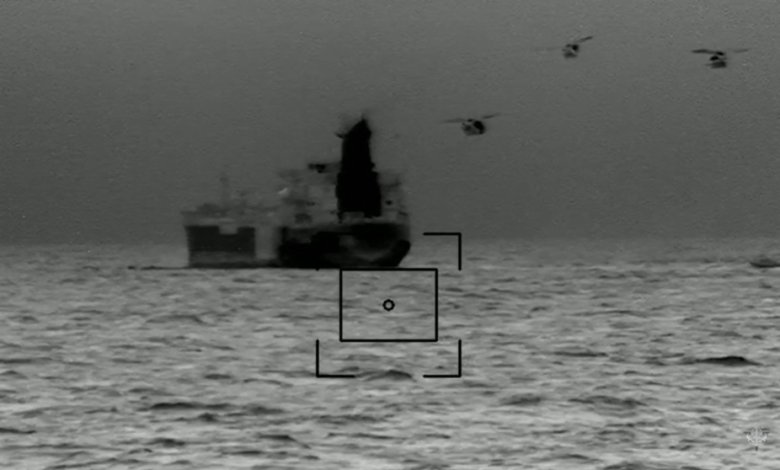
The Libyan Ports and Maritime Transport Authority announced on Wednesday that the Russian oil and gas tanker "Arctic Metagas" sank completely on Tuesday evening in the area between Libya and Malta. According to Libyan sources, authorities received a distress call from the ship before it was hit by a series of explosions of unknown origin, followed by a massive fire that led to its sinking.
In contrast, the Russian Ministry of Transport directly accused Ukraine, asserting that the incident resulted from an attack by the Ukrainian navy using drones launched from the Libyan coast, according to the Russian account. The ministry explained that the ship had departed from the port of Murmansk in northern Russia, carrying a cargo of liquefied natural gas.
Rescue operations and the environmental situation
Official sources confirmed that all 30 members of the tanker's crew survived, with the cargo ship "Rebcast," which was heading to the port of Benghazi, contributing to the rescue operations and pulling the crew from the waves.
On the environmental front, Libyan authorities issued urgent warnings due to the size of the cargo the tanker was carrying, estimated at 62,000 metric tons of liquefied gas, which was en route to the Egyptian port of Port Said. The port authority warned of the dangers of sailing in the area where the tanker sank, citing the potential for severe environmental pollution, in addition to the security risks associated with the incident.
Context of the conflict and the expansion of the confrontation
This incident adds a new dimension to the Russian-Ukrainian conflict, indicating—if the Russian accusations are true—an expansion of the maritime confrontation beyond the Black Sea to the Mediterranean. While drones are a strategic weapon that Kyiv has effectively used to diminish the influence of the Russian fleet, targeting commercial vessels in distant international waters represents a dangerous escalation that could draw in other international actors to ensure maritime security.
Economic repercussions and energy security
The sinking of the tanker carries worrying economic implications, especially as it was headed to Egypt, a country that relies in part on liquefied natural gas (LNG) imports to meet its energy needs. This incident raises concerns in global markets about the security of supply chains, as any threat to energy tanker traffic in vital waterways like the Mediterranean could lead to further increases in marine insurance premiums and global gas prices, exacerbating the economic pressures on energy-importing countries in the region and Europe.