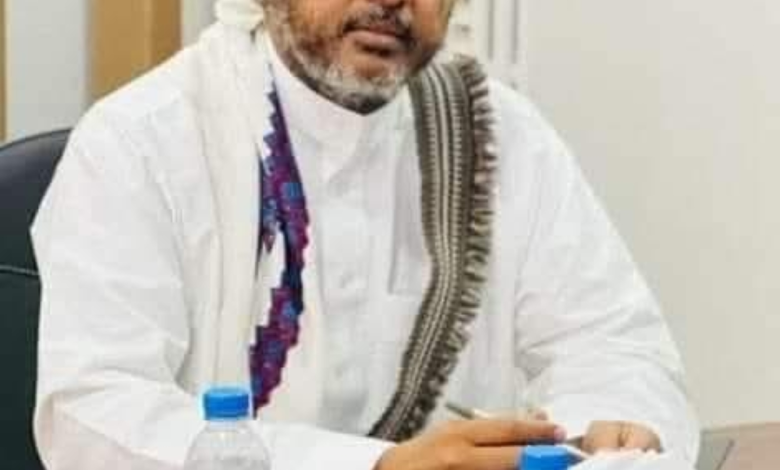
Salah Batis: Tensions in eastern Yemen are an armed rebellion, and the Riyadh Agreement is the solution

Amid the rapid transformations unfolding in Yemen, particularly in the strategically and economically vital eastern governorates, a thorough analysis of the future of the Yemeni state is urgently needed, given the regional and local power struggles. This phase is especially sensitive due to escalating tensions that threaten to undermine political gains, necessitating a serious consideration of the challenges facing the Presidential Leadership Council and the Arab Coalition.
Historical context and strategic importance
The eastern governorates of Yemen (Hadramawt, Al Mahrah, and Shabwah) constitute the country's strategic depth, not only because of their vast geographical area, which comprises the majority of Yemen's territory, but also because of their oil and mineral wealth, as well as their long coastline and extensive land borders with Saudi Arabia and Oman. Historically, these areas remained relatively untouched by direct conflict during the early years of the war. However, recent developments have transformed them into a focal point of political and military tension, threatening the regional security of neighboring countries.
In this context, Salah Batis, a member of the Yemeni Shura Council and a member of the Preparatory Committee for the Unified Council of the Eastern Governorates, confirmed in an extensive interview with Al-Youm newspaper that what is happening in those governorates goes beyond political disagreement to the point of “armed rebellion” against the legitimate authority.
The legitimacy stance on unilateral actions
Batis explained that the Yemeni Shura Council firmly opposes any unilateral actions aimed at imposing a fait accompli by force of arms outside the framework of the state. He noted that the Council has issued clear statements affirming its commitment to the legal status of the Yemeni state, represented by the Presidential Leadership Council headed by Dr. Rashad al-Alimi. He emphasized that any military formations not under the authority of the Ministries of Defense and Interior constitute a direct threat to Yemen's unity and stability, and an attempt to undermine the three agreed-upon frameworks (the Gulf Initiative, the outcomes of the National Dialogue Conference, and UN resolutions).
Strategic partnership with Saudi Arabia
Regarding the regional role, Bates described the relationship between Yemen and Saudi Arabia as one of “shared destiny,” given their shared border of over 1,800 kilometers. He emphasized that Yemen’s security is an integral part of the Kingdom’s security, praising Saudi efforts to contain tensions in Hadramawt and Al-Mahra and prevent the situation from escalating into civil war, particularly through delegations working to de-escalate tensions with tribal and local groups.
In contrast, Bates criticized the moves, which he described as deviating from the goals of the Arab coalition, pointing to the need to correct the course to ensure the unification of efforts towards the main goal, which is restoring the state and ending the Houthi coup.
Riyadh Agreement and the Federal State
The Shura Council member believes that the Riyadh Agreement represents a roadmap for unifying military and political efforts, not merely a power-sharing agreement. He emphasized that the fundamental solution to the Yemeni crisis lies in returning to the outcomes of the Comprehensive National Dialogue Conference, which endorsed a federal state of six regions, guaranteeing the equitable distribution of power and wealth, and ending past grievances in both the south and the north.
Bates concluded his vision by emphasizing that the only way to survive is to end the Iranian-backed Houthi rebellion, restore the capital Sana'a, and build inclusive national state institutions that are not monopolized by a party or tribe, with solid regional and international guarantees.