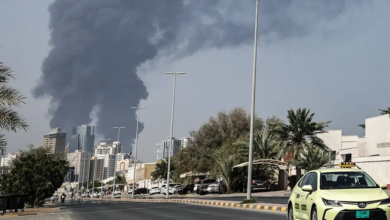

Details of intercepting and destroying drones
In a new military achievement reflecting high efficiency and constant vigilance, authorities announced that Saudi air defenses successfully intercepted and destroyed 42 explosive-laden drones. This development highlights the Kingdom of Saudi Arabia's superior capabilities in protecting its airspace and territory from any external threats and underscores the complete readiness of the Saudi armed forces to address various security challenges effectively and competently.
The historical context of attacks and the evolution of defenses
These events unfold within a long history of regional tensions, as Saudi Arabia has been subjected over the years to a series of systematic and deliberate attacks using drones and ballistic missiles launched by the Iranian-backed Houthi militias in Yemen. Since the start of the Arab Coalition's operations to support legitimacy in Yemen in 2015, the militias have used these weapons to target civilian infrastructure and vital facilities. In response, the Kingdom has developed advanced defense strategies to counter this type of asymmetric threat, resulting in one of the strongest and most sophisticated air defense systems in the Middle East and the world.
The Kingdom's advanced defense systems
Saudi Arabia's air defenses rely on a complex and sophisticated network of radar and missile systems. Among the most prominent of these systems is the American Patriot missile system, which has proven highly effective in intercepting ballistic missiles. In addition, advanced fighter jets such as the F-15 are used to intercept slow-moving, low-flying drones. This precise integration of ground and air defenses provides a comprehensive protective umbrella covering the entire Kingdom and ensuring the neutralization of hostile targets before they reach their intended destinations.
The local and international impact of successful air defenses
Domestically, destroying this large number of drones is of paramount importance in protecting the lives of civilians, both citizens and residents, within the Kingdom. It also ensures the continuation of normal life and safeguards vital infrastructure, including civilian airports, desalination plants, and major economic facilities that are essential to daily life.
At both the regional and international levels, the success of Saudi air defenses in neutralizing these threats plays a crucial role in the stability of global energy markets. Saudi Arabia is one of the world's largest oil exporters, and any attack on its oil facilities could have serious repercussions for the global economy. Therefore, the Kingdom's response to these attacks has garnered widespread praise from the international community, with condemnations pouring in from the United Nations, the Arab League, and allied nations, who consider these attacks a flagrant violation of international humanitarian law and its customary rules.
a summary
In conclusion, these successful operations confirm that Saudi air defenses stand as an impenetrable barrier against anyone who dares to threaten the Kingdom's security and stability. The Saudi Armed Forces continue to develop their capabilities and modernize their defense systems to keep pace with the latest military technologies, ensuring strategic superiority and effective deterrence against any future threats, thus reinforcing the Kingdom's position as a cornerstone of security and stability in the region.