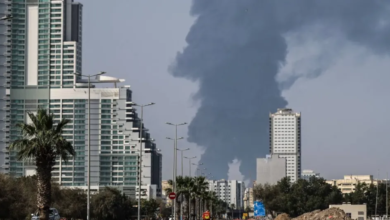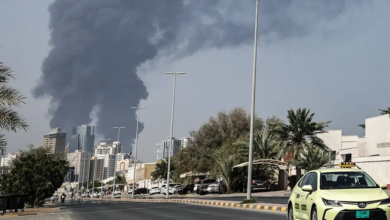
Saudi Arabia: Ballistic missile and 5 drones destroyed in the Eastern Province and Al-Kharj

Details of intercepting the ballistic missile and drone attack
The Saudi Ministry of Defense and the Coalition to Restore Legitimacy in Yemen announced that Saudi air defenses successfully intercepted and destroyed a ballistic missile launched by the Houthi militia toward the Eastern Province. They also destroyed five explosive-laden drones targeting several areas within the Kingdom, including Al-Kharj Governorate. This military achievement reaffirms the high level of capability of the Royal Saudi Air Defense Forces in protecting national airspace and ensuring the safety of citizens and residents.
The coalition explained that the interception operation was completely successful, noting that the Houthi militia continues its hostile and futile attempts to target civilian objects and civilians in a systematic and deliberate manner, which constitutes a flagrant violation of international humanitarian law and its customary rules.
General context and historical background of the attacks
These attacks trace their roots back to the Houthi militia's 2014 coup against the legitimate government in Yemen, which prompted the intervention of the Saudi-led coalition in 2015 at the request of the Yemeni president. Since then, the Houthi militias have consistently used explosive-laden drones and ballistic missiles to target infrastructure and vital facilities in the Kingdom—weapons that UN and international reports indicate are being smuggled to the militia by external parties.
These attacks are part of a broader strategy aimed at political and military pressure, but the vigilance of the Saudi armed forces and the development of their defense systems, such as the advanced air defense system, have prevented these attacks from achieving their destructive goals in the vast majority of cases, thus limiting the militia’s ability to inflict strategic damage.
The importance and expected impact of the event
Local impact
Domestically, this defensive success reinforces the Saudi public's confidence in the capabilities of its armed forces to protect the nation's resources. It also sends a reassuring message to citizens and residents that Saudi airspace is protected by a sophisticated defense shield capable of efficiently and effectively handling various aerial threats, thus ensuring the continuation of normal life and economic activities without any disruption or significant impact.
Regional impact
Regionally, these events highlight the ongoing threat posed by armed militias to the security and stability of the Arabian Gulf region. Targeting the Eastern Province, the heart of the global energy industry, is not only a threat to the Kingdom but also a direct threat to the security of global energy supplies and the regional economy. This necessitates greater regional cooperation to counter these threats and secure shipping lanes and vital infrastructure.
International influence
Internationally, these attacks have drawn widespread condemnation from the international community, including the United Nations and major powers, who view them as undermining peace efforts in Yemen and threatening international peace and security. These recurring incidents underscore the need for the international community to take a firmer stance against arms smuggling, implement relevant Security Council resolutions, and exert effective pressure on the militias to accept political solutions and peace initiatives aimed at a lasting end to the Yemeni crisis.