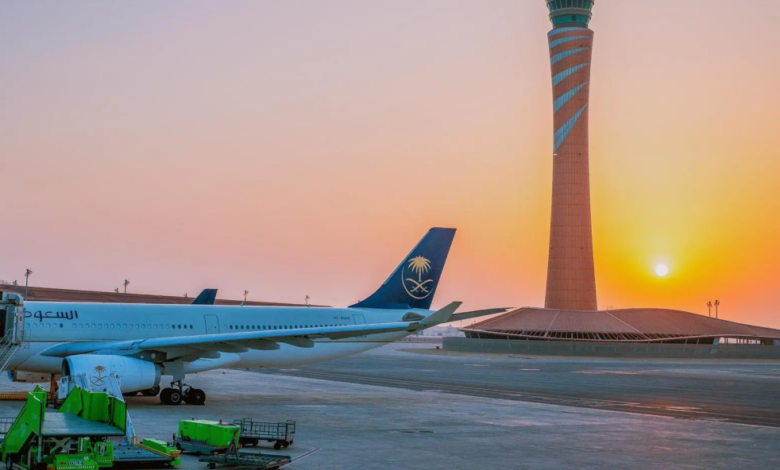
Airports Holding Company announced that it has raised the level of preparedness across its operational network of 27 airports throughout the Kingdom in anticipation of the increased number of pilgrims and travelers during the holy month of Ramadan and the peak Umrah season. This step comes in response to the significant growth witnessed in the Kingdom's aviation sector and aims to ensure a smooth and safe travel experience for arriving and departing passengers.
Strategic alignment with the Kingdom's Vision 2030
These preparations are not limited to routine procedures, but rather come as a direct reflection of the objectives of the National Transport and Logistics Strategy, stemming from the Kingdom’s Vision 2030. The Kingdom seeks to consolidate its position as a global logistics hub linking the three continents, with an ambitious goal of reaching 330 million passengers annually by 2030. The Ramadan season is a real test and an opportunity to highlight the great development in the infrastructure of Saudi airports and their ability to accommodate the large human flows with high efficiency.
Smart operational plans and digital solutions
In detailing its operational plan, Airports Holding focused on integrating advanced technological solutions to expedite travel procedures. These efforts include intensifying on-site monitoring to ensure smooth flow within terminals and reducing waiting times at passport control, customs, and baggage claim. Digital services have also been enhanced, enabling passengers to complete their procedures independently, thus helping to alleviate congestion during peak times, particularly at major airports experiencing high volumes of Umrah pilgrims.
Security and safety are top priorities
The company has placed security and safety standards at the forefront of its priorities by proactively activating emergency response and crisis management plans. These measures include enhancing the efficiency of support services, developing joint coordination mechanisms among all entities operating at the airport, and real-time monitoring of operations through central control rooms to detect and address any challenges immediately, thus ensuring business continuity and passenger safety.
Managing a vast network of airports
It is worth noting that Airports Holding Company oversees the operation of 27 airports through its subsidiaries, which include Riyadh Airports Company, Jeddah Airports Company, Dammam Airports Company, and Airports Cluster II Company. This integrated system works harmoniously to enhance asset efficiency and improve the user experience, thereby strengthening the Kingdom's ability to accommodate the increasing growth in air, tourism, and religious traffic.