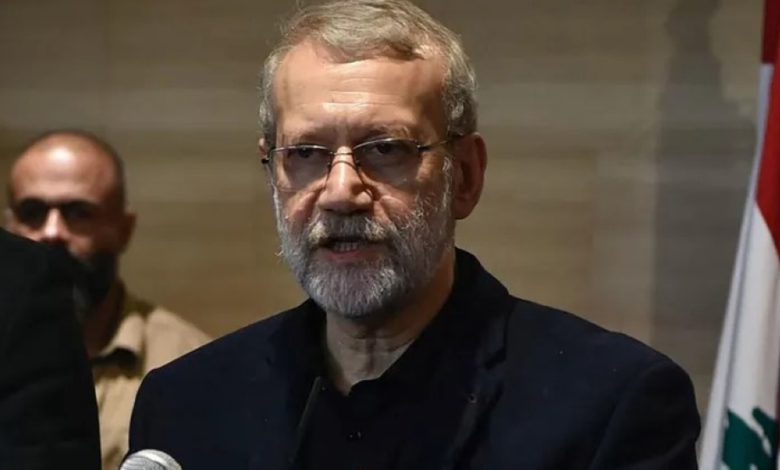
Details of the killing of Ali Larijani and his son: Official Iranian confirmation

Official confirmation of the death of a prominent political figure
Iran's Supreme National Security Council officially announced the assassination of prominent politician and high-ranking Iranian official Ali Larijani, along with his son Morteza and several companions, in an event that has sent shockwaves through Iranian political circles. Official media outlets in Tehran confirmed the news, prompting a wave of questions about the details of the incident and its implications for the internal political landscape of the Islamic Republic at this sensitive time.
Who is Ali Larijani? A remarkable political career
Ali Larijani is considered one of the most prominent political figures in Iran over the past three decades. Born into a long-established religious and political family, Larijani rose through the ranks, holding numerous sensitive positions. Perhaps his most significant political milestone was his long and influential tenure as Speaker of the Islamic Consultative Assembly (the Iranian Parliament), from 2008 to 2020, where he was known for his moderate conservative and pragmatic approach to crisis management.
Prior to this, Larijani played a pivotal role in Iranian foreign policy, serving as secretary of the Supreme National Security Council and as the chief negotiator on Iran's nuclear program, making him a familiar face in international diplomatic circles. He was also appointed by Iran's Supreme Leader to the Expediency Discernment Council, a high-level advisory body in the country that helps resolve disputes between parliament and the Guardian Council.
The Larijani family: Deep political and religious influence
It is impossible to discuss Ali Larijani without mentioning his family, which has formed one of the most important power centers in Iran. His brother, Sadegh Amoli Larijani, headed the judiciary for many years, while another brother, Mohammad Javad Larijani, held high-ranking diplomatic and legal positions. This extensive family influence makes the assassination of Ali Larijani and his son, Morteza, a significant blow to an entire political faction within the Iranian regime, and raises questions about the future of this faction.
Political repercussions and a sensitive regional phase
The assassination of Ali Larijani comes at a time when Iran is going through a highly complex political and economic period. Domestically, the country has recently witnessed significant political shifts, particularly after Larijani himself was disqualified from running in the previous presidential election by the Guardian Council, a decision that sparked widespread controversy at the time and was seen as an indication of fundamental changes in the internal balance of power in favor of the more hardline faction.
The absence of a figure of Larijani's stature, who was seen as a bridge between moderate conservative and reformist factions, may leave a significant political vacuum. Regionally and internationally, Tehran loses a seasoned politician with a wide network of relationships and a deep understanding of the geopolitical complexities of the Middle East. Tehran's confirmation of this tragic event opens the door to a new phase of anticipation, as attention now turns to the official investigations to uncover the circumstances of the incident and how the Iranian leadership will deal with this sudden void.