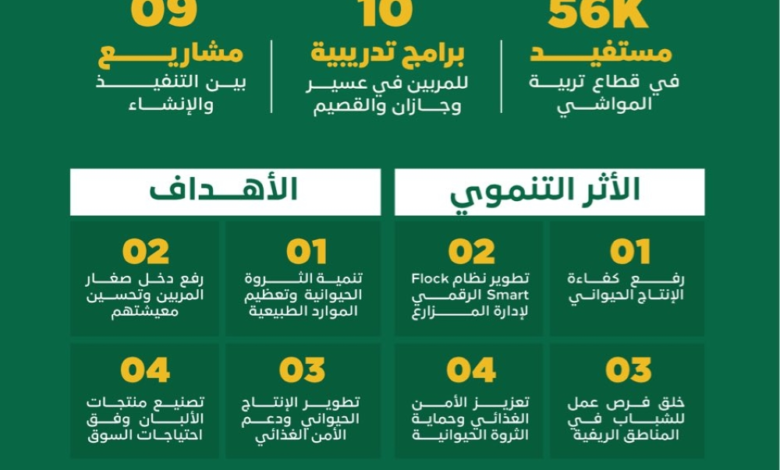

في خطوة استراتيجية تهدف إلى تعزيز منظومة الأمن الغذائي الوطني، أعلن برنامج التنمية الريفية الزراعية المستدامة «ريف السعودية» عن إنجاز سبعة مجمعات نموذجية متكاملة مخصصة لقطاع الإنتاج الحيواني. وتتوزع هذه المشاريع الحيوية في مناطق مختلفة من المملكة، مستهدفةً دعم أكثر من 56 ألف مستفيد من صغار مربي الماشية، ورفع كفاءة هذا القطاع المحوري بما يتماشى مع مستهدفات رؤية المملكة 2030.
يأتي هذا المشروع في سياق جهود المملكة الحثيثة لتنويع اقتصادها وتقليل الاعتماد على استيراد الغذاء. تاريخياً، شكلت تربية الماشية جزءاً لا يتجزأ من النسيج الاجتماعي والاقتصادي في شبه الجزيرة العربية، إلا أن الممارسات التقليدية لم تعد كافية لمواجهة تحديات النمو السكاني ومتطلبات السوق الحديثة. ومن هنا، برزت أهمية إنشاء بنية تحتية متطورة تتبنى أحدث التقنيات والمعايير العالمية لضمان استدامة الموارد الطبيعية وزيادة الإنتاجية، وهو ما تسعى هذه المجمعات لتحقيقه.
مجمعات الإنتاج الحيواني: بنية تحتية متكاملة لصغار المربين
شملت المجمعات الجديدة مناطق حيوية واستراتيجية لتربية الماشية، وهي المدينة المنورة، والقصيم، ونجران، وحائل، بالإضافة إلى الجبيل، وحفر الباطن، وعرعر. وأوضح المتحدث الرسمي لبرنامج «ريف السعودية»، ماجد البريكان، أن هذه المجمعات تمثل نقلة نوعية في منظومة العمل الريفي، حيث ستسهم بشكل مباشر في تحسين المستويات المعيشية لصغار المربين وتجويد مخرجاتهم، مؤكداً أن العمل جارٍ على استكمال التجهيزات النهائية لاستقبال المستفيدين قريباً.
تم تصميم هذه المراكز لتكون حاضنات متكاملة توفر للمربين بيئة مثالية لتطوير قطعانهم، من خلال توفير الخدمات البيطرية، وإرشادات حول أفضل سلالات الماشية، وتطبيق أساليب علمية في التغذية والرعاية الصحية، مما يضمن تعزيز جودة اللحوم ومنتجات الألبان وزيادة العائد المادي للمزارعين.
التحول الرقمي والتمكين المعرفي
لم يقتصر الدعم على البنية التحتية المادية، بل امتد ليشمل الجانب التقني والمعرفي. وفي هذا الإطار، كشف البريكان عن إطلاق النظام الرقمي المتطور «Flock Smart»، وهو تطبيق متخصص في إدارة المزارع يتيح للمربين تتبع إنتاجية قطعانهم، وتقييم حالتها الصحية، ورقمنة سجلاتها بالكامل. تهدف هذه الأداة الرقمية إلى تمكين المربين من اتخاذ قرارات مبنية على بيانات دقيقة، وضمان استدامة العمليات التشغيلية ورفع كفاءتها. وعلى صعيد التأهيل الميداني، نفذ البرنامج عشر دورات تدريبية متخصصة في مناطق عسير وجازان والقصيم، ركزت على نقل المعرفة حول ممارسات التغذية الحديثة، والإدارة الفعالة للموارد العلفية، ورفع الجاهزية التشغيلية للمجتمعات الريفية.
أثر اقتصادي واجتماعي يمتد عبر المملكة
من المتوقع أن يكون لهذه المجمعات تأثير إيجابي متعدد الأبعاد. على المستوى المحلي، ستوفر فرص عمل جديدة في المناطق الريفية وتساهم في استقرار المجتمعات المحلية عبر تحسين دخل الأسر العاملة في قطاع تربية الأغنام والماعز والإبل. أما على المستوى الوطني، فإن زيادة الإنتاج المحلي من اللحوم الحمراء سيقلل من فاتورة الاستيراد ويعزز من قدرة المملكة على تحقيق الاكتفاء الذاتي في أحد أهم المنتجات الغذائية. إن الاستثمار الأمثل للموارد الطبيعية وتطوير النظم التقليدية لا يخدم فقط الأهداف الاقتصادية، بل يدعم أيضاً استدامة البيئات الصحراوية ويحافظ على التنوع الحيوي، مما يرسخ مكانة المملكة كلاعب رئيسي في تحقيق التنمية الزراعية المستدامة على الصعيدين الإقليمي والدولي.