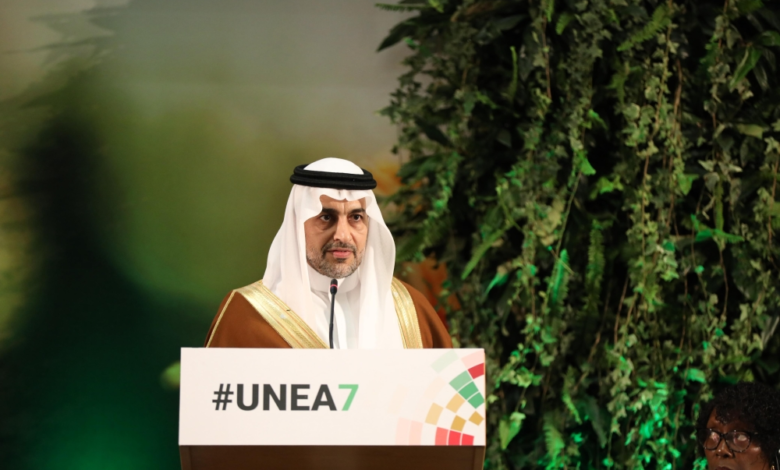
Saudi Arabia presents the results of COP16 on combating desertification in Nairobi

In a move reflecting the Kingdom of Saudi Arabia's leading role in international efforts to protect the planet, the Deputy Minister of Environment, Water and Agriculture, Engineer Mansour Al-Mashiti, reviewed the strategic results and decisive outcomes achieved by the Kingdom during its presidency of the 16th Conference of the Parties to the United Nations Convention to Combat Desertification (COP16). This came during his address to the seventh session of the United Nations Environment Assembly held in Nairobi, Kenya, where he highlighted the radical transformations brought about by the Riyadh resolutions in the course of international environmental action.
Global context and increasing challenges
These Saudi initiatives come at a time when the world is facing unprecedented environmental challenges. UN reports indicate that land degradation directly impacts the lives of more than 3 billion people worldwide, threatening food and water security and exacerbating forced migration and conflict. In this context, the Kingdom's hosting of COP16 in December 2024 was not merely a symbolic event, but a historic turning point aimed at moving the international community from the stage of pledges to the stage of actual implementation, leveraging its political and economic weight and its ambitious environmental initiatives such as the "Saudi Green Initiative" and the "Green Middle East Initiative.".
National strategies with global perspectives
Al-Mashiti affirmed that the Kingdom operates within an integrated framework stemming from the National Environment Strategy, with its impact extending to the regional and international levels. He explained that the outcomes of the Riyadh Conference successfully mobilized international efforts to adopt 37 pivotal resolutions covering vital aspects, most notably promoting the sustainable management of agricultural lands and rangelands, and supporting research and innovation to build a solid knowledge base, with a particular focus on empowering local communities, women, and youth, who are considered the first line of defense against climate change.
Riyadh's Agenda: A Shift from Reaction to Proactivity
In detailing the most significant achievements, the Deputy Minister highlighted the launch of the “Riyadh Agenda,” which includes approximately 40 practical initiatives to mitigate land degradation. Foremost among these initiatives is the “Riyadh Global Drought Preparedness Partnership,” representing a paradigm shift in global environmental thinking. This partnership aims to enhance the resilience of developing and most vulnerable countries by adopting a proactive approach to addressing drought before it occurs, rather than simply responding to disasters after they have struck. This initiative is of utmost importance given that drought now threatens a quarter of the world’s population.
Private sector partnership and the future of sustainability
To ensure the sustainability of these efforts, Al-Mashiti highlighted the launch of the “Businessmen for the Earth” initiative in collaboration with the Convention Secretariat, which aims to integrate the private sector as a key partner in the environmental equation. This initiative seeks to encourage global companies to adopt business models that balance economic growth with the preservation of natural resources.
Al-Mashiti concluded his speech by emphasizing the need for integration between international environmental agreements (climate, biodiversity, and desertification) and linking them to national development plans of countries, while stressing the importance of providing accessible financing mechanisms and transferring knowledge to developing countries, to ensure a green and sustainable future for future generations.