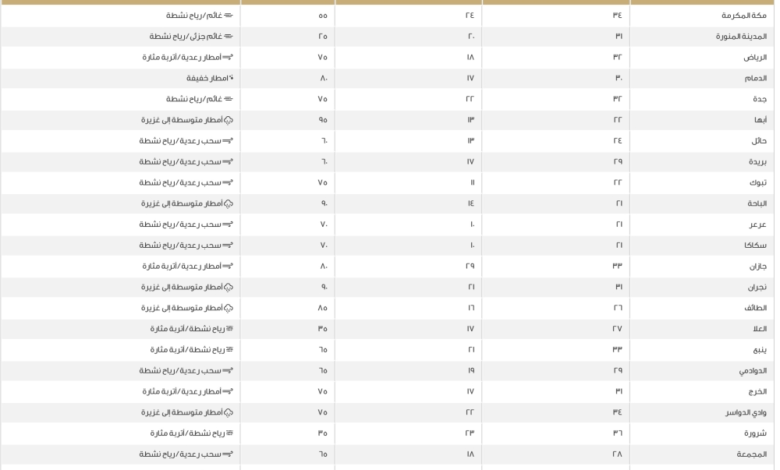

أعلن المركز الوطني للأرصاد في تقريره اليومي عن تفاصيل درجات الحرارة في السعودية، حيث شهدت مدن ومناطق المملكة تبايناً ملحوظاً في درجات الحرارة العظمى اليوم الأربعاء. وقد سجلت مدينة الدمام بالمنطقة الشرقية 30 درجة مئوية، مما يعكس حالة من الاستقرار الجوي النسبي في المنطقة.
قائمة درجات الحرارة العظمى في مدن المملكة
وفقاً للبيان الرسمي الصادر عن المركز الوطني للأرصاد، جاءت درجات الحرارة العظمى المسجلة في مختلف المدن والمحافظات على النحو التالي:
- الدمام: 30 درجة مئوية.
- مكة المكرمة: 34 درجة مئوية.
- المدينة المنورة: 31 درجة مئوية.
- الرياض: 32 درجة مئوية.
- جدة: 32 درجة مئوية.
- أبها: 22 درجة مئوية.
- حائل: 24 درجة مئوية.
- بريدة: 29 درجة مئوية.
- تبوك: 22 درجة مئوية.
- الباحة: 21 درجة مئوية.
- عرعر: 21 درجة مئوية.
- سكاكا: 21 درجة مئوية.
- جازان: 33 درجة مئوية.
- نجران: 31 درجة مئوية.
- الطائف: 26 درجة مئوية.
- العلا: 27 درجة مئوية.
- ينبع: 33 درجة مئوية.
- الدوادمي: 29 درجة مئوية.
- الخرج: 31 درجة مئوية.
- وادي الدواسر: 34 درجة مئوية.
- شرورة: 36 درجة مئوية.
- المجمعة: 28 درجة مئوية.
- الوجه: 26 درجة مئوية.
- رفحاء: 24 درجة مئوية.
- القريات: 20 درجة مئوية.
- طريف: 19 درجة مئوية.
- القنفذة: 32 درجة مئوية.
- الأحساء: 31 درجة مئوية.
- حفر الباطن: 29 درجة مئوية.
- بيشة: 32 درجة مئوية.
- السودة: 17 درجة مئوية.
- روضة التنهات: 30 درجة مئوية.
- صحراء الدهناء: 30 درجة مئوية.
- الصمان: 31 درجة مئوية.
السياق المناخي والجغرافي للمملكة العربية السعودية
تتميز المملكة العربية السعودية بمساحتها الشاسعة وتنوعها الجغرافي الكبير، مما ينعكس بشكل مباشر على التباين الواضح في درجات الحرارة في السعودية بين مناطقها المختلفة. فبينما تسجل المرتفعات الجنوبية الغربية مثل السودة وأبها درجات حرارة معتدلة إلى باردة نسبياً تتراوح بين 17 و 22 درجة مئوية، نجد أن المناطق الصحراوية والجنوبية مثل شرورة تسجل معدلات أعلى تصل إلى 36 درجة مئوية. هذا التنوع المناخي يعود تاريخياً إلى موقع المملكة ضمن الحزام الصحراوي المداري الجاف، مع استثناء المرتفعات الجبلية التي تتأثر بالرياح الموسمية وتتمتع بمناخ أكثر اعتدالاً طوال العام.
أهمية متابعة تقارير الأرصاد وتأثيرها المحلي والإقليمي
تلعب التقارير اليومية الصادرة عن المركز الوطني للأرصاد دوراً حيوياً على عدة أصعدة. على المستوى المحلي، تساعد معرفة درجات الحرارة وحالة الطقس المواطنين والمقيمين في تخطيط أنشطتهم اليومية، خاصة في قطاعات حيوية مثل الزراعة، وإدارة الموارد المائية، والسياحة الداخلية. فعلى سبيل المثال، تجذب الأجواء المعتدلة في الطائف والباحة وأبها آلاف السياح الباحثين عن الهروب من حرارة المدن الكبرى، مما يعزز من الاقتصاد المحلي.
أما على الصعيد الإقليمي والدولي، فإن دقة البيانات الميتيرولوجية (الرصد الجوي) الصادرة من المملكة تساهم في تعزيز سلامة الملاحة الجوية والبحرية في منطقة الشرق الأوسط. وتعتبر هذه البيانات أساسية لشركات الطيران العالمية التي تعبر الأجواء السعودية، وكذلك لحركة السفن التجارية في البحر الأحمر والخليج العربي. كما تدعم هذه المعلومات الدقيقة جهود الاستدامة البيئية ومراقبة التغير المناخي، وهو ما يتماشى بشكل وثيق مع أهداف رؤية السعودية 2030 في حماية البيئة وتحسين جودة الحياة.
في الختام، يُنصح دائماً بمتابعة التحديثات الرسمية الصادرة عن الجهات المختصة لضمان السلامة العامة، خاصة مع التغيرات السريعة التي قد تطرأ على حالة الطقس خلال الفترات الانتقالية بين فصول السنة.