Temperatures in Saudi Arabia today: Sakaka is the coldest at 14 degrees Celsius

The National Center for Meteorology in Saudi Arabia has released details of the weather forecast and expected temperatures for Saturday across the Kingdom, in an official statement highlighting the significant climatic variations between the northern, central, and coastal regions. This report is part of the ongoing, meticulous monitoring conducted by relevant authorities to ensure the safety of citizens and residents and to provide essential information to vital sectors.
Temperature details in Saudi cities
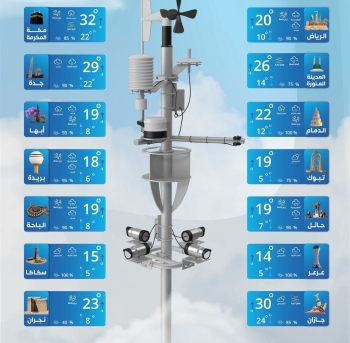
Data released by the center showed significant temperature variations, with northern regions recording a noticeable decrease compared to other areas. The following is a summary of the most significant temperatures recorded:
- Northern region: The city of Sakaka recorded the lowest temperature in this statement at 14 degrees Celsius, followed by Arar at 16 degrees, reflecting the relatively cold weather that these regions are experiencing.
- Highlands and mountainous regions: Abha and Tabuk recorded 18 degrees Celsius, while Hail and Al-Baha recorded 17 degrees, which are normal rates for regions characterized by high geographical nature.
- Major and central cities: The temperature in the capital Riyadh and Dammam reached 23 degrees Celsius, while Buraidah recorded 21 degrees, and Medina 25 degrees.
- Coastal and western regions: Mecca maintained warm temperatures, recording 30 degrees Celsius, Jeddah and Jazan 29 degrees, and Najran 27 degrees.
Climate diversity in the Kingdom and its impact
This report reflects the great geographical and climatic diversity of the Kingdom of Saudi Arabia. While northern regions such as Sakaka and Arar are affected by cold air masses coming from the north, causing them to record the lowest temperatures, coastal areas such as Jeddah and Jazan enjoy a more moderate and warmer climate due to the influence of the Red Sea, which moderates the atmosphere and retains heat.
This variation highlights the importance of the different preparations made by residents in each region, as the weather in the north requires wearing winter or relatively heavy clothing, while the weather remains moderately summery in Mecca and Jeddah.
The role of the National Center for Meteorology and the importance of data
The National Center for Meteorology plays a pivotal role in daily life within the Kingdom, as its reports extend beyond simply monitoring temperatures to include early warnings of unstable weather conditions, such as rain or dust storms. This data is a fundamental pillar for the transportation, agriculture, education, and health sectors.
These periodic reports help drivers and travelers on intercity highways to take precautions, especially in areas that may experience fog or sudden weather changes accompanied by a drop in temperature. Experts always advise following official forecasts to avoid any weather surprises, particularly during the transitional periods between seasons.