Saudi Arabia and the World Economic Forum: Industrial Transformation Agreement 2026

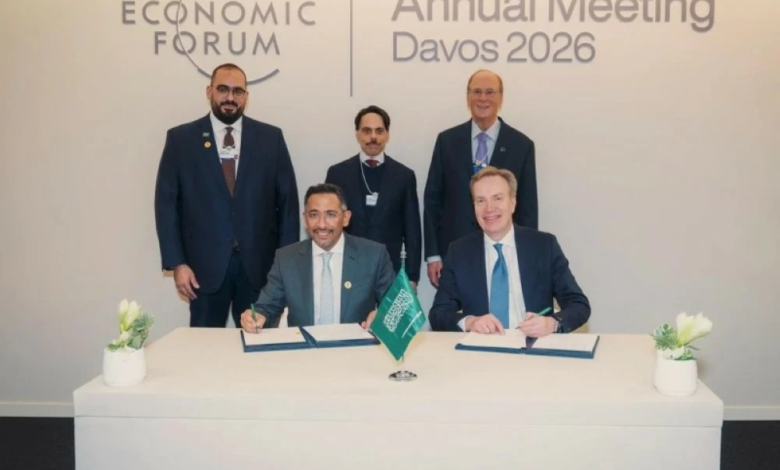
In a strategic move reflecting the Kingdom of Saudi Arabia's commitment to strengthening its position as a global industrial power, the Swiss city of Davos witnessed the signing of an important agreement between the Kingdom and the World Economic Forum, on the sidelines of the Forum's 2026 Annual Meeting. The signing ceremony took place in the presence of His Highness Prince Faisal bin Farhan bin Abdullah, Minister of Foreign Affairs and head of the Kingdom's delegation, where the agreement was signed by His Excellency the Minister of Industry and Mineral Resources, Mr. Bandar bin Ibrahim Al-Khorayef, and the President of the World Economic Forum, Mr. Børge Brende, in the presence of His Excellency the Minister of Economy and Planning, Mr. Faisal bin Fadel Al-Ibrahim.
This agreement comes at a time when the Kingdom is witnessing unprecedented economic activity within the framework of "Saudi Vision 2030," which places the industrial sector at the heart of efforts to diversify income sources and reduce dependence on oil. This partnership is particularly important given the pivotal role of the World Economic Forum as an international platform that brings together political and business leaders, enabling the Kingdom to benefit from accumulated global expertise to develop its industrial infrastructure according to the latest standards of the Fourth Industrial Revolution.
The agreement primarily aims to design a comprehensive, systematic model for industrial transformation that is applicable and scalable within the Kingdom. This model focuses on moving from theories and assessments to tangible, practical implementation through the development of advanced digital tools and the building of the necessary human capital to lead this transformation. The agreement also enables the Ministry of Industry and Mineral Resources to directly engage with the forum's technological ecosystem, opening up broad opportunities for collaboration with leading global technology companies and integrated systems solution providers to enhance the efficiency of Saudi factories and increase their resilience in the face of global challenges.
A key aspect of this collaboration is highlighting local Saudi innovations, specifically the Lighthouse OS developed by Oxagon, a subsidiary of NEOM. This system is a leading national model that reflects the Kingdom's ability not only to import technology but also to innovate smart industrial solutions that meet global standards, thus reinforcing the Kingdom's position as a leading regional hub for industrial innovation.
At both the regional and international levels, this agreement is expected to enhance the competitiveness of Saudi products in global markets and attract more foreign direct investment to the industrial sector. By adopting advanced manufacturing technologies and artificial intelligence, the Kingdom aims to maximize the economic impact of industry, in line with the objectives of the National Industrial Strategy, and achieve a significant leap in productivity and sustainability.