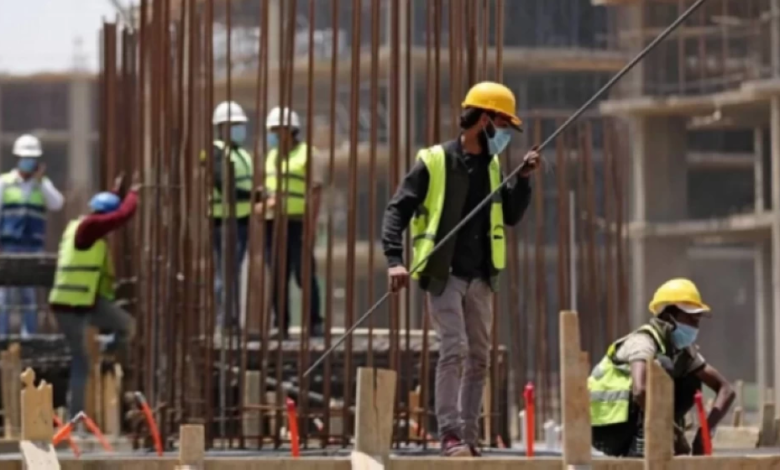

The latest data from the General Authority for Statistics in Saudi Arabia shows that the construction cost index rose by 1.0% year-on-year in November 2025, compared to the same period of the previous year. This increase was driven by a parallel rise in construction costs for both the residential and non-residential sectors, with both sectors registering 1.0% growth. This reflects a uniform trend in the prices of production inputs and construction materials across various construction sectors.
Monthly stability amid annual growth
Despite the annual increase, the results of the construction cost index survey revealed remarkable price stability on a monthly basis, with costs showing little change in November 2025 compared to October of the same year. This monthly stability is a positive indicator for contractors and real estate developers, as it allows them to more accurately predict costs and manage the cash flow of existing projects, avoiding the sharp and sudden price fluctuations that can disrupt schedules and budgets.
The economic context and the role of Vision 2030
This indicator comes at a time when the construction sector in Saudi Arabia is experiencing an unprecedented boom, driven by mega-projects and ambitious programs stemming from Vision 2030. With the accelerated pace of work on major projects such as NEOM, Qiddiya, and the Red Sea Project, in addition to housing projects under the Sakani program, the demand for building materials and construction services is naturally increasing. Experts point out that a slight increase of only 1%, amidst this enormous demand, reflects the efficiency of local supply chains and the Saudi market's ability to absorb the growing demand without triggering sharp inflationary waves in the prices of essential materials.
The importance of the index for decision-makers and investors
The Construction Cost Index bulletin holds strategic importance that extends beyond simply monitoring prices; it serves as a vital tool for economic decision-makers, investors, and contractors. This accurate data aids in preparing feasibility studies for new projects, updating construction contracts, and settling financial claims related to price fluctuations. Furthermore, it contributes to greater transparency in the real estate market, attracting more foreign and domestic investment to the construction sector, a cornerstone of the national economy's diversification away from oil.
Through these periodic reports, the General Authority for Statistics affirms its commitment to providing a reliable statistical reference that supports strategic planning and contributes to drawing a clear roadmap for the future of construction projects in the Kingdom, thus ensuring the sustainability of growth in this vital sector.