Projects of the Saudi Program for the Development and Reconstruction of Yemen in Abyan

The Kingdom of Saudi Arabia continues its leading role in supporting stability and development in the Republic of Yemen, going beyond immediate relief aid to establishing sustainable infrastructure that ensures a better future for generations to come. In this context, the Saudi Development and Reconstruction Program for Yemen has intensified its efforts in Abyan Governorate, one of Yemen's most strategically and agriculturally important governorates, through a package of projects covering five vital sectors, reflecting the deep historical and fraternal ties that bind the two brotherly nations.
A developmental context to address infrastructure challenges
Like other Yemeni governorates, Abyan has suffered the consequences of the conflict, which has negatively impacted infrastructure and basic services. Current Saudi interventions are part of a comprehensive strategy aimed at bridging the service gap and transitioning from relief to sustainable development. These projects are not merely about building walls, but also about revitalizing economic and social life, thereby contributing to enhanced security and social stability in a governorate that has suffered for years from a severe lack of services.
Sustainable solutions in the water and energy sector
In line with global trends toward sustainability, the Saudi program has focused on integrating renewable energy solutions into water projects. These interventions cover the districts of Ahwar, Khanfar, Zinjibar, and Lawdar, where solar-powered water pumping projects have been implemented. The importance of this initiative lies in addressing the recurring fuel shortages that have hindered water access to homes, thus ensuring sustainable water security, reducing the operational financial burden on local authorities, and providing clean and safe water for Yemeni families.
Educational renaissance in densely populated areas
Recognizing the importance of education as a cornerstone of nation-building, the program implemented the project to construct and equip the "Alawi Model School" in Ja'ar, Khanfar District. The choice of this location is significant, as Ja'ar, along with Lawdar, is one of the most densely populated cities in Abyan. This project aims to address the problem of overcrowded classrooms and provide a modern and stimulating learning environment, which will positively impact the quality of educational outcomes and reduce school dropout rates.
Strengthening the health system in rural areas
In the health sector, the construction of a rural hospital in the Sab'ah district has emerged as a significant and impactful project. This hospital aims to alleviate the suffering of residents in rural and remote areas who previously had to travel long distances to reach urban centers for medical treatment. The hospital will include vital departments such as obstetrics and gynecology, emergency services, surgery, and specialized clinics, all equipped with state-of-the-art medical equipment and laboratories. This will reduce pressure on central hospitals and improve the overall efficiency of the health system in the governorate.
Food security and economic empowerment
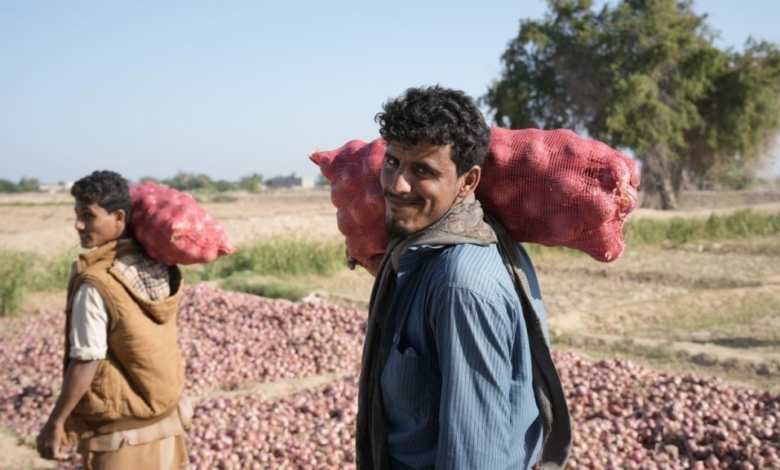
The Saudi development vision has not overlooked the agricultural sector, which is the backbone of the economy in Abyan. Farmers in several districts have been supported with solar-powered irrigation systems, contributing to reduced agricultural production costs and increased yields, thus enhancing local food security. These efforts complement the "Livelihood Support" initiatives, which aim to empower families economically and create sustainable job opportunities, transforming beneficiaries from aid recipients into active producers in their communities.
It is worth noting that the Saudi Program for the Development and Reconstruction of Yemen has so far provided 268 development projects and initiatives distributed across various Yemeni governorates, including the education, health, water, energy, transportation, agriculture, and fisheries sectors, in addition to capacity-building programs for government institutions, in a diligent effort to outline a promising future for Yemen.