The Saudi Program for the Development and Reconstruction of Yemen: Strategic Projects and a Promising Future

Saudi-Yemeni relations are deeply rooted in history. For Yemen, the Kingdom of Saudi Arabia is not merely a geographical neighbor, but a strategic depth and a supportive brother throughout various historical junctures. Since the 1970s, the Kingdom has been committed to providing all forms of developmental and humanitarian support to the Republic of Yemen, stemming from the bonds of brotherhood, neighborliness, and shared destiny that unite the two countries and their peoples.
In light of the grave challenges that Yemen has faced in recent years, which have directly affected infrastructure and basic services, the establishment of the Saudi Program for the Development and Reconstruction of Yemen in mid-2018 by royal decree of the Custodian of the Two Holy Mosques, King Salman bin Abdulaziz Al Saud - may God protect him - represents a qualitative shift in support mechanisms, moving from emergency relief to comprehensive sustainable development.
A strategic vision for development and reconstruction
The Saudi Program for the Development and Reconstruction of Yemen (SPDRY) is not limited to implementing construction projects; it adopts a strategic vision aimed at addressing the root causes of development challenges. The program operates according to international best practices to enhance planning efficiency and implementation effectiveness, ensuring the sustainability of its developmental impact. This strategy aims to help the Yemeni government and state institutions recover and improve the living standards of Yemeni citizens, thus contributing directly to achieving security and stability, as development is a fundamental pillar for building peace.
Achievements in numbers: 268 projects in 8 sectors
Through this program, the Kingdom has achieved tangible results on the ground, implementing more than 268 development projects and initiatives across eight vital sectors: education, health, water, energy, transportation, agriculture and fisheries, capacity building for government institutions, and community development programs. These projects have encompassed 16 Yemeni governorates, reflecting the comprehensiveness of the support and the equitable distribution to meet the needs of diverse regions.
A renaissance in the health and education sectors
The program has given special attention to the health of the Yemeni people, with its projects having a positive impact on the lives of 4 million beneficiaries. Some of the most prominent examples of this are:
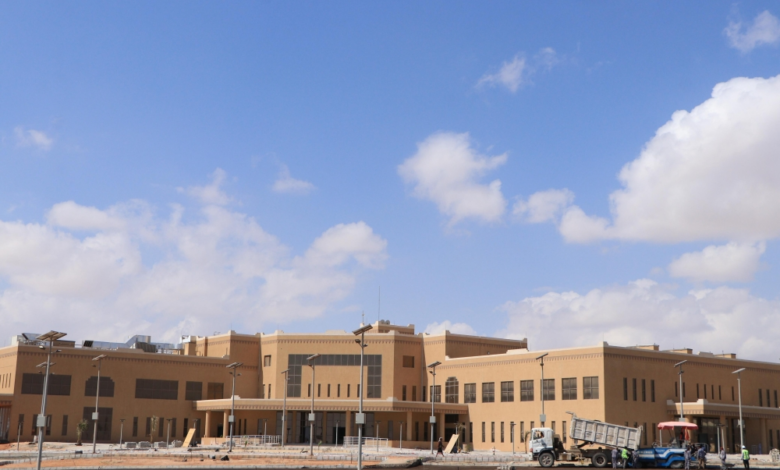
- King Salman Medical and Educational City in Al-Mahra: It is the largest project supporting the health and education sectors, with an area of one million square meters, and includes an integrated hospital with a capacity of 110 beds.
- Prince Mohammed bin Salman Hospital in Aden: With a bed capacity of 270 beds, it has provided more than 3 million medical services since its operation, and includes specialized centers for heart and kidney dialysis.
In the education sector, the helping hands extended to 11 governorates, through the construction of schools and the equipping of universities, such as the Aden University Development Project, the establishment of faculties of medicine and pharmacy at Taiz University, and the expansion of the Saba Region University in Marib, which ensures the continuation of the educational process and the building of a generation capable of leading the future.
The lifeblood: water, transport, and infrastructure
Recognizing the importance of water security, the program's projects have helped cover 100% of the water needs in Al Ghaydah and 50% in Socotra. In the transport sector, approximately 14 million Yemenis have benefited from road, port, and airport rehabilitation projects, including:
- Rehabilitating Aden International Airport and Al Ghaydah Airport to connect Yemen with the world.
- Developing Nishtun Port and Socotra Port to support trade.
- Rehabilitation of the Al-Wadi'ah border crossing and the strategic Al-Abir road.
Empowering the community and preserving heritage
The program did not neglect cultural and economic aspects, launching initiatives to empower women and youth and support livelihoods. It also focused on preserving Yemeni identity through projects to restore historical buildings, most notably the restoration of the historic Seiyun Palace, ensuring it remains a testament to the rich history of Yemeni civilization.
In conclusion, the Saudi Program for the Development and Reconstruction of Yemen represents a pioneering model in international development work, confirming the Kingdom of Saudi Arabia’s permanent commitment to supporting brotherly Yemen until it regains its stability and prosperity, so that happy Yemen remains an active and influential part of its Arab and regional environment.