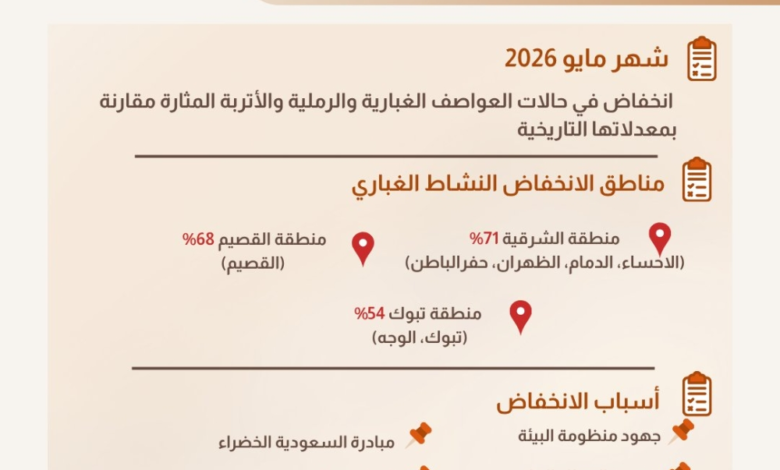

في مؤشر بيئي إيجابي لافت، سجلت المملكة العربية السعودية تراجعاً قياسياً في معدلات نشاط العواصف الغبارية خلال شهر مايو المنصرم، حيث كشف المركز الإقليمي للعواصف الغبارية والرملية عن انخفاض إجمالي في ساعات الحالات الغبارية بنسبة بلغت 43% مقارنة بالمتوسط التاريخي. وتصدرت المنطقة الشرقية قائمة المناطق الأكثر تحسناً، مسجلة انخفاضاً استثنائياً بنسبة 71%، مما يعكس نجاح الجهود الوطنية المبذولة لتحسين جودة الهواء والحفاظ على البيئة.
هذا التقرير لم يقتصر على المنطقة الشرقية وحدها، بل أظهر تفاوتاً إيجابياً في مختلف مناطق المملكة. فقد حلت منطقة القصيم في المرتبة الثانية بنسبة انخفاض وصلت إلى 68%، تلتها منطقة تبوك (وتشمل تبوك والوجه) التي سجلت تراجعاً في النشاط الغباري بنسبة 54%. هذه الأرقام لا تمثل مجرد إحصائيات عابرة، بل هي ثمرة لخطط استراتيجية طويلة الأمد تهدف إلى مكافحة التصحر وتعزيز الغطاء النباتي.
جهود وطنية تثمر: كيف تراجعت العواصف الغبارية؟
عزا المركز الإقليمي هذا التحسن البيئي الملموس إلى حزمة من العوامل المتكاملة، التي تأتي في مقدمتها الجهود المكثفة والمستمرة التي تبذلها منظومة البيئة في المملكة. ويبرز دور مشاريع ومستهدفات “مبادرة السعودية الخضراء” كعامل رئيسي في هذا الإنجاز، حيث ساهمت مشاريع التشجير وإعادة تأهيل الأراضي المتدهورة في تثبيت التربة وتقليل مصادر الأتربة والغبار المتطاير. وإلى جانب ذلك، لعبت برامج تقنين الرعي دوراً مهماً في حماية الغطاء النباتي الطبيعي ومنحه فرصة للنمو والازدهار، مما يزيد من قدرة الأرض على مقاومة عوامل التعرية الريحية.
كما أسهمت عمليات استمطار السحب الموجهة، التي ينفذها البرنامج الإقليمي لاستمطار السحب، في زيادة الهطولات المطرية بشكل ملحوظ في عدة مناطق، الأمر الذي أدى بدوره إلى رفع مستوى رطوبة التربة، وهو عامل حاسم في الحد من تطاير الغبار. هذه الجهود المتضافرة تشكل نموذجاً ناجحاً في الإدارة البيئية المتكاملة.
ما وراء الأرقام: فهم الظاهرة وتأثيرها
تاريخياً، تقع المملكة العربية السعودية وأجزاء واسعة من الشرق الأوسط ضمن ما يُعرف بـ “حزام الغبار” العالمي، مما يجعلها عرضة بشكل طبيعي للعواصف الرملية والترابية، خاصة خلال فترات الانتقال بين الفصول. هذه الظواهر المناخية لا تؤثر فقط على جودة الهواء والرؤية الأفقية، بل تمتد آثارها السلبية لتشمل قطاعات حيوية كالصحة العامة، حيث تزيد من معدلات الإصابة بأمراض الجهاز التنفسي والحساسية، بالإضافة إلى تأثيرها على الاقتصاد من خلال تعطيل حركة النقل الجوي والبري، وإلحاق الضرر بالبنية التحتية والمزروعات.
لذلك، فإن الانخفاض المسجل في نشاط العواصف الغبارية يحمل أهمية كبرى تتجاوز البعد البيئي. فعلى الصعيد المحلي، يساهم هذا التحسن في رفع جودة الحياة للمواطنين والمقيمين، وتقليل الأعباء الاقتصادية والصحية المرتبطة بهذه الظاهرة. أما على الصعيد الإقليمي، فإنه يعزز من مكانة المملكة كدولة رائدة في تبني حلول مبتكرة لمواجهة التحديات المناخية، ويقدم نموذجاً يمكن للدول المجاورة التي تعاني من نفس المشكلة الاستفادة منه، بما يتماشى مع أهداف “مبادرة الشرق الأوسط الأخضر” الأوسع نطاقاً.