Faisal Al-Ibrahim: Saudi Arabia's flexibility enhances its position in global trade

Saudi Arabia’s Minister of Economy and Planning, Faisal Al-Ibrahim, affirmed that the Kingdom has successfully strengthened its strategic position on the international trade map, capitalizing on the fundamental transformations taking place in the global economy. He explained that this success was not accidental, but rather the result of proactive planning and preparation, bolstered by economic diversification efforts within the framework of Saudi Vision 2030, which aims to transform the Kingdom into a global logistics hub connecting three continents.
Institutional flexibility in the face of changes
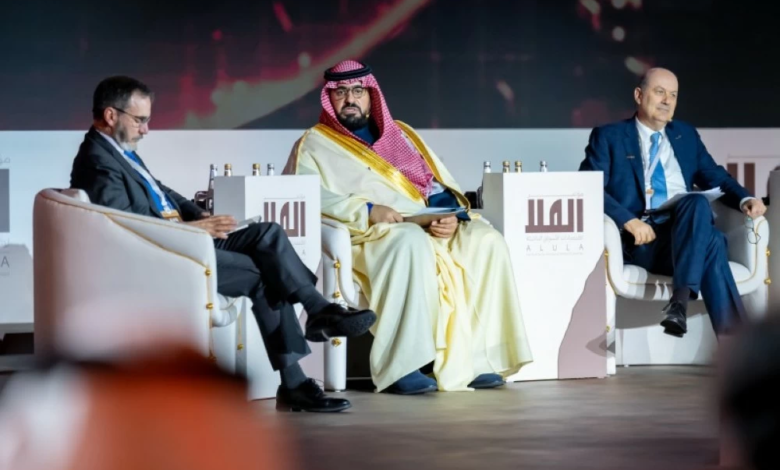
During his address at the Al-Ula Emerging Markets Economies Conference, Al-Ibrahim noted that the traditional rules-based global market system is facing unprecedented pressures, making "flexibility" the most valuable asset for countries aspiring to growth. He added that economies that have invested in building strong institutions and flexible regulatory frameworks, such as the Kingdom, are best positioned to absorb economic shocks and transform geopolitical and economic challenges into promising investment opportunities.
The minister’s remarks come at a time when the world is witnessing a reshaping of global supply chains, as the Kingdom, through its National Transport and Logistics Strategy, seeks to exploit its distinguished geographical location to be a major artery for global trade, which reflects the practical application of the concept of adapting to changes put forward by the minister.
The future of global trade: reallocation with no turning back
In his analysis of the international landscape, Al-Ibrahim refuted rumors of the end of globalization or a decline in global trade due to trade tensions between major powers like the United States and China. He emphasized that what is happening is not a retreat, but rather a "reorientation" of trade and investment routes. He explained that these tensions are driving the creation of new trade hubs, thus opening the door wide for emerging economies to present themselves as reliable alternatives and new manufacturing and export centers.
He added that periods of global economic stress often expose institutional weaknesses in countries, emphasizing that those nations that are quick to make decisions and flexible in adapting will emerge victorious. He pointed out that delaying responses to changes imposes a cumulative economic cost that may be difficult to offset later.
Towards a new global trading system
The Minister of Economy and Planning concluded his remarks by outlining the features of the future, noting that the world is witnessing the formation of a new trading system that differs in its nature from traditional globalization. This new system focuses on unlocking the potential of emerging markets and relies on predictability and agreed-upon rules to ensure the continued flow of trade, which remains the primary driver of global economic growth.
It is worth noting that in recent years, the Kingdom of Saudi Arabia has made significant leaps in the growth of non-oil activities, which confirms the success of economic diversification policies and the ability of the Saudi economy to adapt to various global scenarios, thereby enhancing the confidence of international investors in the Saudi investment environment.