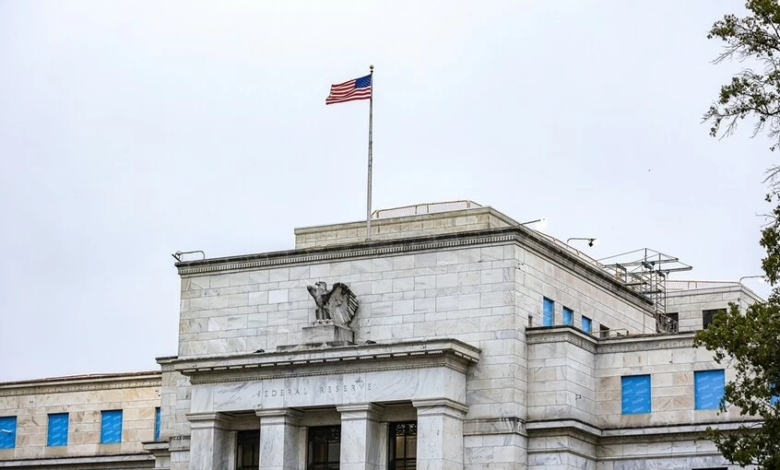

The US Federal Reserve (the central bank) released its semi-annual Financial Stability Report, issuing a strong warning that a large-scale conflict in the Middle East, particularly one involving Iran, tops the list of risks threatening the stability of the global financial system. The report explained that the potential repercussions of such a conflict, including a possible sharp shock to global oil prices and disruption to energy supplies, represent the greatest concern for financial market participants and economic analysts.
The report, released on Friday, concluded that geopolitical risks, particularly those related to tensions in the Middle East, have overshadowed other previously prevalent concerns. In a survey of financial experts, the potential for an oil price shock emerged as the greatest threat to financial stability, surpassing other worries such as rapid advancements in artificial intelligence and risks to private credit. The report specifically warned that continued and escalating conflict could exacerbate inflationary pressures globally while simultaneously slowing economic growth in the United States and other countries, placing central banks in a difficult position.
Historical context and strategic importance of the region
These warnings come against a backdrop of historical tensions between Iran and Western powers, particularly the United States. The Persian Gulf region is a vital artery for the global economy, with nearly a fifth of the world's oil consumption passing through the Strait of Hormuz, which borders Iran. Any disruption to this strategic waterway could lead to an immediate shortage of global oil supplies, causing prices to spike dramatically, as happened in previous crises such as the Gulf War in the 1990s.
Expected impact on the global economy
The potential economic impact will not be limited to higher fuel prices for consumers. The oil price shock will increase production and transportation costs for businesses worldwide, from factories in China to farmers in Europe. These higher costs will inevitably be passed on to consumers in the form of higher prices for goods and services, fueling a new wave of global inflation that central banks are already struggling to contain. Moreover, the economic slowdown that accompanies high inflation (stagflation) is one of the worst-case scenarios, as it reduces individuals' purchasing power, weakens corporate profits, and could push major economies into recession.
Therefore, the Federal Reserve report serves as a reminder that geopolitical stability in the Middle East is not merely a regional issue, but a fundamental element in maintaining the health and stability of the global economy. These risks underscore the interconnectedness of global markets and how an event in one part of the world can trigger shockwaves affecting economies and societies everywhere.