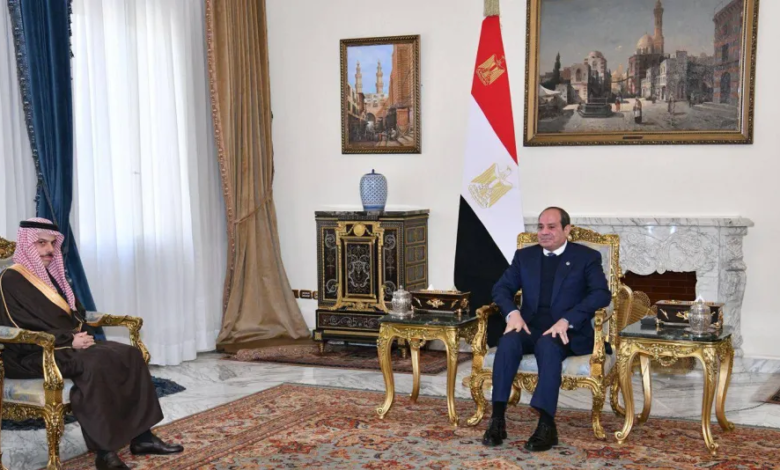
Saudi Arabia and Egypt: A call for de-escalation and protecting regional security

Amid escalating tensions in the Middle East, the Kingdom of Saudi Arabia and the Arab Republic of Egypt reaffirmed their firm commitment to de-escalation and prioritizing dialogue and diplomacy to prevent the region from sliding into wider conflicts. This unified stance reflects the depth of the strategic relationship between Cairo and Riyadh and their shared understanding of the threats to Arab national security.
Regional context and historical background
The Saudi-Egyptian initiative cannot be viewed in isolation from current events, as the region is experiencing unprecedented turmoil due to the ongoing war in the Gaza Strip and its catastrophic humanitarian consequences, in addition to tensions in the Red Sea and on the northern fronts. Historically, the Saudi-Egyptian axis has always served as a safety valve for the Arab world in times of crisis; the two countries possess political, religious, and economic weight that makes them the cornerstone of any joint Arab action aimed at restoring stability.
The importance and impact of joint coordination
This agreement is of paramount importance on several levels:
- Locally and regionally, this stance sends a reassuring message to the Arab people that there is a wise leadership managing the crisis prudently and striving to protect national resources from the devastation that any comprehensive regional wars might cause. It also puts an end to attempts by some parties to exploit the political vacuum to fuel sectarian or political conflicts.
- Internationally, the unified voice of Riyadh and Cairo constitutes a powerful pressure point on the international community, particularly the major powers and the Security Council, to take serious action towards imposing a ceasefire and establishing a genuine political horizon. The world understands that the stability of the global economy and energy security are closely linked to the stability of this vital region.
Towards sustainable solutions
Both countries have affirmed on numerous occasions that military and security solutions will not achieve lasting peace, and that the only way to end the cycle of violence is to address the root causes of the conflict, specifically through a just and comprehensive solution to the Palestinian question in accordance with international law and the Arab Peace Initiative, guaranteeing the establishment of an independent Palestinian state. This steadfast position reflects a far-sighted strategic vision aimed at transforming the region from an arena of conflict into a region of prosperity and economic development.