
Introduction: A Saudi-Egyptian summit to contain the crisis
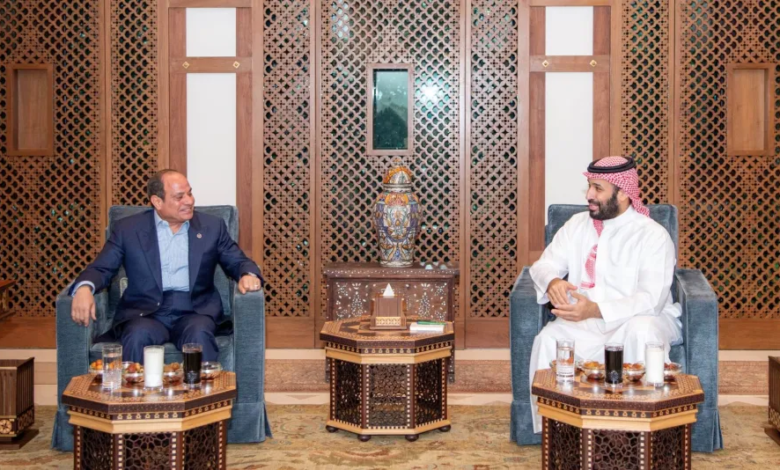
Amid escalating tensions in the Middle East, the recent talks between Saudi Crown Prince Mohammed bin Salman and Egyptian President Abdel Fattah al-Sisi represent a crucial step in Arab efforts to de-escalate the situation. These discussions focused primarily on ways to halt the military escalation in the region and prevent it from sliding into a full-blown war that could undermine international security and stability. These diplomatic moves come at a critical juncture, demanding high-level coordination between Riyadh and Cairo, given their pivotal role in stabilizing the Arab world.
Historical context: Saudi-Egyptian relations as a safety valve
Historically, the Kingdom of Saudi Arabia and the Arab Republic of Egypt have played a pivotal role in leading joint Arab action and confronting geopolitical challenges. This coordination is rooted in decades of strategic cooperation during the various crises that have plagued the region. Saudi-Egyptian relations serve as a cornerstone of Arab national security, as both countries share a common vision of rejecting foreign interference in Arab affairs and adhering to peaceful and diplomatic solutions to conflicts. This historical legacy of cooperation makes any summit or contact between the two countries' leaderships a highly significant political event, one that is crucial for charting a course toward de-escalation and unifying the Arab ranks.
Dimensions of the current military escalation in the Middle East
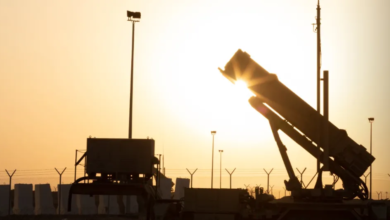
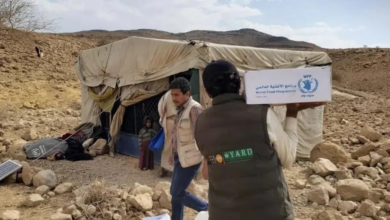
These talks coincide with an unprecedented military escalation on several regional fronts, most notably the ongoing war in the Gaza Strip and its catastrophic humanitarian consequences. The impact of this conflict has not been limited to the Palestinian territories; it has extended to serious security tensions in the Red Sea and the Bab el-Mandeb Strait, directly affecting maritime navigation and global trade. The Lebanese-Israeli border and other regional tensions are also witnessing an escalation that threatens to widen the scope of the conflict, a fact recognized by both Riyadh and Cairo, who are working diligently to contain it by pressing the international community for immediate and effective intervention.
The regional and international importance of joint coordination
Regionally, the joint efforts of the Saudi Crown Prince and the Egyptian President aim to forge a firm stance demanding an immediate ceasefire in Gaza and ensuring the unimpeded delivery of humanitarian aid. Both countries consistently emphasize that a just and lasting solution lies in the establishment of an independent Palestinian state within the 1967 borders, with East Jerusalem as its capital, in accordance with the Arab Peace Initiative and relevant UN resolutions.
On the international level, the convergence of visions between Saudi Arabia and Egypt has a profound impact on the stability of the global economy. Saudi Arabia, as the world's largest oil exporter, and Egypt, which controls the Suez Canal, a vital global shipping lane, possess considerable leverage. The stability of these two countries and their regional environment is essential to ensuring the security of energy supplies and the continued flow of global supply chains. Therefore, their shared message to the international community and major powers is clear: the legal and moral responsibility must be upheld to halt the war machine and compel all parties to respect international law.
Summary: Towards a stable Middle East
In conclusion, the talks between Crown Prince Mohammed bin Salman and President Abdel Fattah al-Sisi embody a firm commitment to protecting the resources of the Arab peoples and sparing the region the ravages of war. The continuation of this strategic coordination represents a glimmer of hope amidst a complex regional landscape, and underscores that diplomatic solutions and dialogue are the only path to achieving lasting security and stability in the Middle East, far removed from the language of weapons and ongoing military escalation.