
The Saudi Ministry of Environment, Water and Agriculture has renewed its strong warnings against illegal logging practices, announcing hefty fines of up to 10,000 riyals. This coincides with the launch of the second edition of the national awareness campaign, "Our Winter is Healthy." The campaign aims to protect vegetation from encroachment and promote a culture of responsible recreation during the winter season, ensuring the sustainability of natural resources for future generations.
Details of fines and implementing regulations
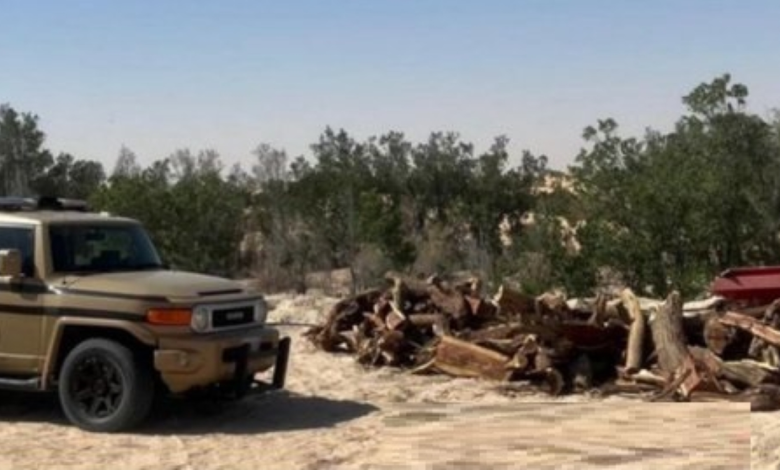
The ministry revealed a list of deterrent penalties targeting all stages of dealing with local firewood. A fine of 10,000 riyals was set for each tree cut down from vegetation cover, uprooted, or traded without an official permit. The penalties extend beyond cutting to include supply chains; a fine of up to 5,000 riyals is imposed for each cubic meter of local firewood and charcoal transported, sold, or stored. The penalty is doubled for repeat offenses, and violators are required to repair any resulting environmental damage.
Strategic context: Vision 2030 and the Saudi Green Initiative
These stringent measures are not arbitrary; rather, they fall within a comprehensive strategic framework aligned with the objectives of Saudi Vision 2030 and the Green Saudi Arabia initiative. The Kingdom is working diligently to combat desertification, which poses a significant environmental and economic challenge to the region. Native wild trees, such as acacia, tamarisk, and jujube, are considered an invaluable national treasure, requiring decades to grow under harsh desert climatic conditions. Their loss, therefore, represents an environmental loss that would be difficult to compensate for in the short term.
Environmental and climatic impacts of logging
The ministry warned of the catastrophic consequences of illegal logging, pointing to its direct role in exacerbating climate change. Stripping the land of its vegetation leads to:
- Increased rates of sand encroachment and dust storms that affect public health.
- The soil loses its cohesion and ability to retain water, which accelerates the pace of drought.
- Rising temperatures and increased levels of carbon dioxide in the atmosphere are a result of the lack of trees that act as carbon sinks.
Sustainable alternatives and social responsibility
As part of alternative solutions, the Ministry urged hikers and outdoor enthusiasts to rely entirely on imported charcoal and firewood, which are available in the markets as a safe and sustainable alternative that does not harm the local environment. Regulatory authorities have tightened their control over markets to prevent the sale of local firewood, calling on all members of society to report violations and actively participate in protecting biodiversity, considering environmental protection a shared responsibility and a national duty.