Faisal bin Farhan discusses de-escalation with the foreign ministers of China, India and Indonesia

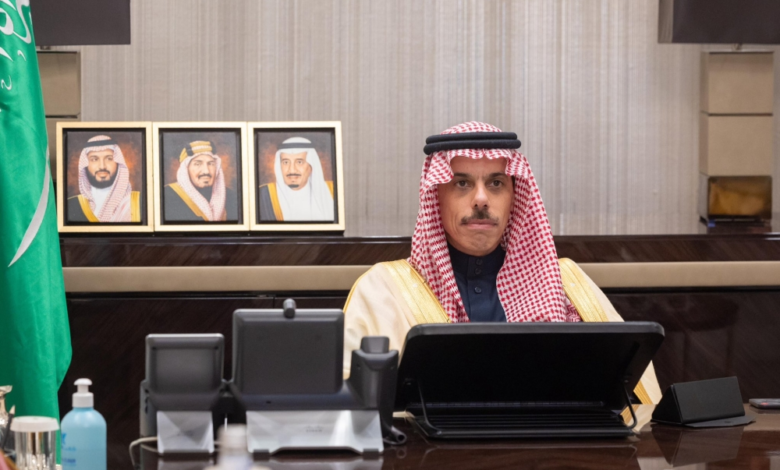
As part of the intensive diplomatic efforts led by the Kingdom of Saudi Arabia to contain escalating tensions in the Middle East, His Highness Prince Faisal bin Farhan bin Abdullah, Minister of Foreign Affairs , received on Wednesday a series of high-level telephone calls from his counterparts in three major Asian powers, including the People’s Republic of China, the Republic of India, and the Republic of Indonesia.
Details of the diplomatic talks
His Highness the Minister of Foreign Affairs began his diplomatic activities by receiving a telephone call from His Excellency the Minister of Foreign Affairs of the Republic of Indonesia, Mr. Sugino. The discussion focused on the latest developments in the field and political situation in the region, and reviewed the Islamic and international efforts being made to de-escalate tensions and protect civilians.
His Highness also received a similar call from the Minister of External Affairs of the Republic of India, Dr. Subrahmanyam Jaishankar. The two sides discussed the security implications of current events and their direct impact on regional and international peace and security, emphasizing the importance of joint coordination to ensure the stability of the region and avert further risks.
In a related development, Prince Faisal bin Farhan received a phone call from His Excellency Wang Yi, Member of the Political Bureau of the Central Committee of the Communist Party of China and Minister of Foreign Affairs of the People's Republic of China. The call addressed the rapidly evolving situation and the need for the international community, particularly the permanent members of the Security Council, to fulfill their responsibilities in maintaining global security.
Regional context and the importance of Saudi action
These contacts come at a time when the Middle East is experiencing unprecedented turmoil and tension, necessitating urgent diplomatic intervention to prevent the conflict from escalating. Saudi Arabia plays a pivotal role in this context, leveraging its political, religious, and economic influence to lead efforts toward de-escalation and promote sustainable political solutions.
The Saudi Foreign Minister's outreach to international powers such as China, India, and Indonesia reflects the Kingdom's strategy of diversifying international partnerships and garnering global support for the region's just causes. China, as a major power, India, as a strategic and economic partner, and Indonesia, as the world's largest Muslim-majority country, represent influential players who can effectively contribute to efforts to achieve a ceasefire and de-escalate tensions.
Expected impact of diplomatic efforts
These consultations are expected to contribute to forging a unified international stance that rejects military escalation and calls for prioritizing dialogue. Through these efforts, Saudi diplomacy seeks to achieve several strategic objectives, most notably:
- International pressure was exerted to stop military operations and protect civilians.
- Ensuring that the region does not slide into a full-blown regional war that could threaten energy supplies and the global economy.
- Strengthening coordination with rising Asian powers to ensure a balance in international positions on Middle Eastern issues.
These moves confirm the Kingdom’s firm commitment to supporting regional security and stability, and to continuing its tireless efforts in cooperation with sisterly and friendly countries to end the crises plaguing the region.