The Foreign Minister discusses regional developments with his Pakistani counterpart

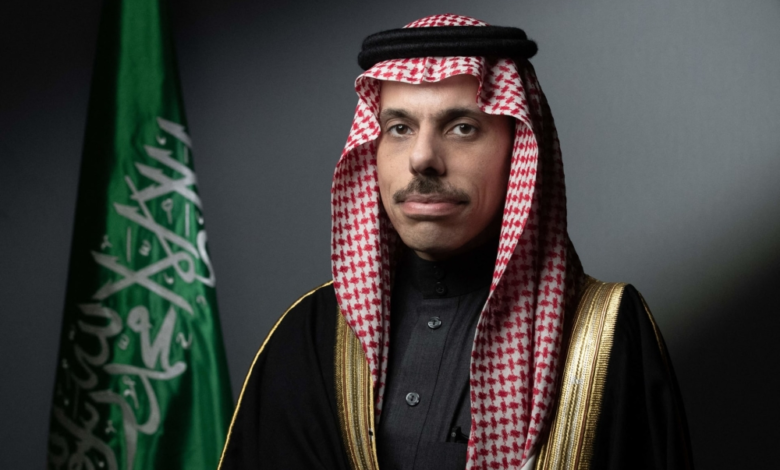
His Royal Highness Prince Faisal bin Farhan bin Abdullah, the Saudi Minister of Foreign Affairs, held a telephone conversation on Monday with His Excellency Muhammad Ishaq Dar, Deputy Prime Minister and Minister of Foreign Affairs of the Islamic Republic of Pakistan. The bilateral discussions focused on current developments in the region and their repercussions, as well as reviewing diplomatic efforts aimed at containing the situation and de-escalating tensions.
Current regional context and diplomatic moves
These telephone conversations come at a highly sensitive time, as the Middle East region witnesses unprecedented escalation and rapidly escalating geopolitical tensions. Saudi Arabia, in its leading and pivotal role, seeks to intensify its communication with brotherly and friendly nations to prevent the region from sliding into wider conflicts that could threaten international peace and security. These diplomatic moves are part of Riyadh's ongoing strategy to support regional stability, protect international navigation, ensure the security of global energy supplies, and work towards finding peaceful solutions to the successive crises.
Historical background of Saudi-Pakistani relations
This connection cannot be understood in isolation from the deep historical ties that bind Riyadh and Islamabad. Saudi-Pakistani relations are strategic and robust, based on strong religious, cultural, and historical bonds. Over the decades, the two countries have stood shoulder to shoulder in confronting regional and international challenges. Pakistan is considered one of the Kingdom's most important strategic allies, with continuous and high-level coordination in various international forums, most notably the Organization of Islamic Cooperation, to unify visions and positions on issues of concern to the Arab and Islamic worlds.
The importance of joint coordination and its expected impact
At both the local and regional levels, this joint coordination reflects the two leaderships' keenness to exchange views and unify diplomatic efforts. Saudi Arabia is leading an active diplomatic campaign aimed at de-escalation and facilitating the delivery of humanitarian aid to those affected in conflict zones. For its part, Pakistan plays a vital role as a major Islamic power, making its supportive stance towards Saudi efforts a matter of significant strategic importance that contributes to strengthening stability.
On the international level, this alignment sends a clear message to the international community about the need to uphold its responsibilities in maintaining regional security. Close cooperation between Riyadh and Islamabad contributes to forming a strong diplomatic front that pushes for peaceful solutions and the implementation of international resolutions, thus reducing the chances of foreign interventions that could further complicate the regional landscape and laying the foundation for a period of stability that supports development and economic prosperity for the peoples of the region.