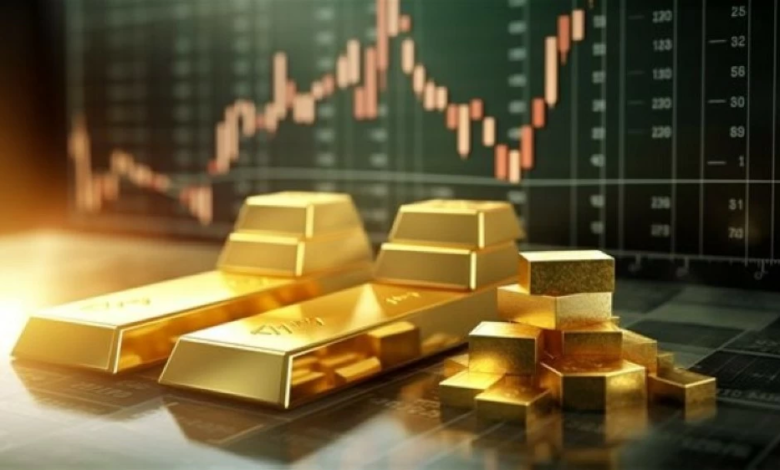
Global financial markets have recently witnessed significant movements, with gold prices rising slightly and other precious metals achieving unprecedented gains, reflecting a state of anticipation and caution among investors. This surge comes at a time of increasing global economic challenges, reshaping the landscape of safe-haven investments.
Economic context and market movements
Gold has historically been considered the primary safe haven for investors during periods of economic uncertainty and geopolitical tensions. Rising gold prices are typically linked to key factors, most notably fluctuations in the US dollar exchange rate, inflation rates, and interest rate decisions by major central banks. When the dollar weakens or interest rates trend downward, the yellow metal becomes more attractive as a hedge against the erosion of the purchasing power of paper currencies.
In contrast, the unprecedented gains recorded by other precious metals such as silver, platinum, and palladium are often attributed to a combination of investment and industrial demand. For example, these metals are vitally used in the technology, electric vehicle, and clean energy industries, making their prices more sensitive to the growth of the global industrial economy.
Historical background and importance of gold
Throughout history, gold has maintained its value as a measure of wealth, from its use as currency in ancient civilizations to its role as a monetary reserve for nations until the mid-20th century. Despite the decoupling of currencies from gold, central banks worldwide still hold substantial reserves to bolster their financial stability. This historical legacy imbues gold with a psychological and economic weight unmatched by any other asset, explaining its continued demand even during slight price fluctuations.
Expected impacts locally and internationally
This rise in metal prices has far-reaching implications:
- On the international level: The rise in precious metals indicates the likelihood of continued inflationary pressures, which may prompt financial institutions to reassess their investment strategies and diversify portfolios away from traditional stocks and bonds.
- On a regional and local level, the rise in gold prices directly impacts jewelry and ornament markets, as higher prices may lead to a temporary decrease in consumer demand. However, it presents an opportunity for savers who hold gold as an investment asset to achieve attractive returns.
In conclusion, the precious metals sector remains a vital indicator of the health of the global economy. While analysts monitor these record gains, the question remains how sustainable this upward trend will be in light of rapidly evolving economic conditions.