
Introduction: Renewed excitement in the Saudi Roshan League
Saudi and Arab football fans will be glued to their screens this Wednesday as the Kingdom's three biggest clubs – Al-Hilal, Al-Ahli, and Al-Ittihad – prepare for crucial and highly anticipated matches in the Saudi Professional League. These games come at a particularly sensitive time, as the clubs aim to solidify their domestic standings before entering the upcoming Asian Champions League, adding an extra layer of competitiveness and excitement to tonight's encounters.
General context and historical development of the Saudi League
The Saudi Professional League is witnessing an unprecedented historical boom, especially after the investment and privatization project for sports clubs launched by the wise leadership, which has elevated the league to the ranks of world-class leagues. The three clubs currently playing (Al-Hilal, Al-Ittihad, and Al-Ahli) represent fundamental pillars in the history of Saudi football, boasting massive fan bases and a rich history of local and continental championships. This development has made every league match like an early final, where points play a crucial role in determining qualification for Asian championships and ultimately deciding the champion amidst fierce competition.
Al-Ahli visits Al-Fayha: Ambitious pursuit
At 6:55 PM at Al Majma'ah Sports City Stadium, Al Ahli's first football team will be a formidable guest against Al Fayha. Al Ahli, nicknamed "The Royal," will be looking to secure three points to continue their fierce pursuit of league leaders Al Nassr. They enter the match in third place with 65 points, accumulated from 20 wins, 5 draws, and 2 losses. Meanwhile, Al Fayha aims to capitalize on home advantage and the support of their fans to achieve a positive result that would solidify their position in the mid-table, where they currently sit in ninth place with 33 points (9 wins, 6 draws, and 12 losses).
Al-Ittihad and Neom: The search for stability
In Jeddah, specifically at Prince Abdullah Al-Faisal Sports City Stadium, Al-Ittihad will host NEOM at 9:00 PM. Al-Ittihad, nicknamed "The Dean," is aiming for a crucial morale-boosting victory before their Asian campaign, especially given their current form. They currently sit in sixth place with 45 points (13 wins, 6 draws, 8 losses). Meanwhile, NEOM, a promising sports project, will look to capitalize on Al-Ittihad's absences and instability to achieve a historic win. They currently occupy eighth place with 36 points (10 wins, 6 draws, 11 losses).
Al-Hilal and Al-Kholoud: A rehearsal for the Cup final
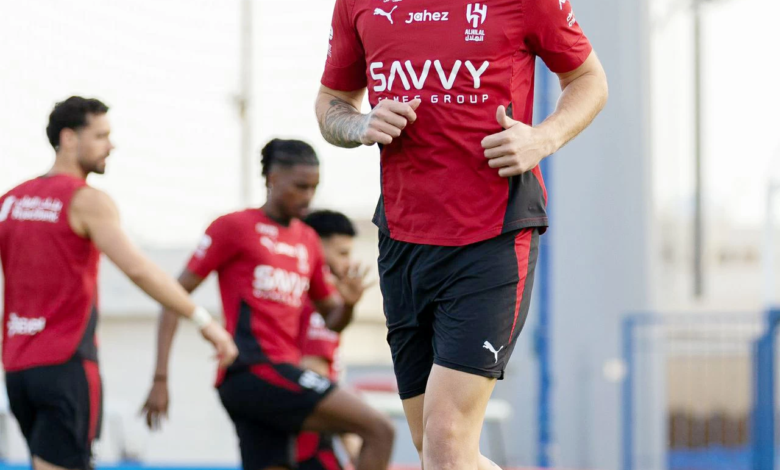
In Riyadh, the Kingdom Arena will host a highly anticipated match between Al-Hilal and their guests, Al-Kholoud, at 9:00 PM. This match serves as a crucial test for Al-Hilal before the final of the most prestigious cup competition. Al-Hilal, bolstered by home advantage and the support of their fans, aims for victory to close the gap on league leaders Al-Nassr. They currently sit in second place with 65 points and an unbeaten record (19 wins and 8 draws). Meanwhile, Al-Kholoud enters the match desperately seeking a lifeline to escape relegation. They currently occupy 14th place with 26 points (8 wins, 2 draws, and 17 losses).
The importance of confrontations and their expected impact
Today's matches are of paramount importance on all levels. Domestically, the results will play a pivotal role in reshaping the top four and defining the relegation battle. Regionally and continentally, these encounters are considered the true test of Saudi clubs' readiness to represent the Kingdom in the AFC Champions League, as fans are counting on these clubs to maintain Saudi Arabia's dominance in Asia.
Tonight's match schedule:
- Al-Fayha vs. Al-Ahli: 6:55 PM
- Al-Hilal vs. Al-Kholoud: 9:00 PM
- Al-Ittihad vs. Neom: 9:00 PM