Al-Jawf weather today: Winds and dust in Sakaka and Al-Qurayyat – Warning details

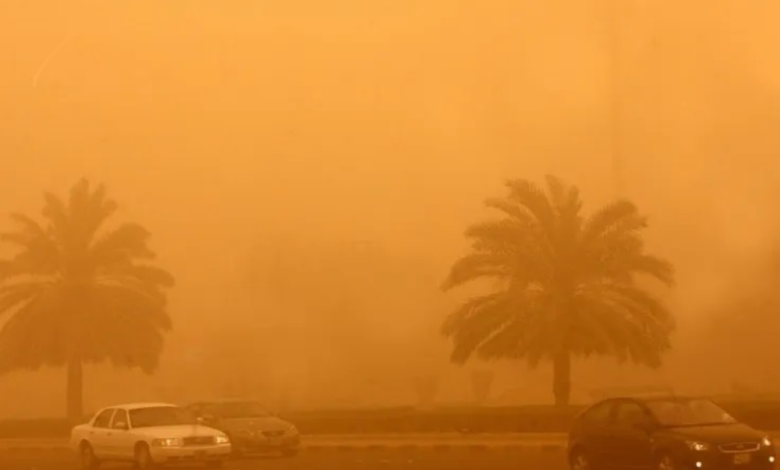
The National Center for Meteorology in Saudi Arabia issued an important warning regarding the expected weather conditions in the Al-Jawf region, indicating that the region is affected by active surface winds that stir up dust and sand, which calls for caution and vigilance on the part of citizens and residents, especially drivers on highways.
Weather details in Al-Jawf region
The center explained in its daily report that the weather conditions include the city of Sakaka and the governorate of Dumat al-Jandal , where active winds with speeds ranging between 40 and 49 kilometers per hour are expected. These winds will stir up dust and sand, causing a significant decrease in horizontal visibility, which requires extra caution while traveling.
The alert also included the governorates of Al-Qurayyat and Tabarjal , where the meteorological department predicted dust storms accompanied by strong winds, reducing horizontal visibility to between 3 and 5 kilometers. The center indicated that this weather condition would continue, God willing, from 9:00 AM until 7:00 PM on Wednesday.
Climate context and the effects of weather fluctuations
These weather fluctuations are typical of the climate in the northern regions of the Kingdom, with Al-Jawf being one of the areas directly affected by air masses and passing low-pressure systems. Active, dust-laden winds are a common phenomenon during the transitional periods between seasons, as surface winds pick up and transport dust from open desert areas towards cities and provinces.
Monitoring these reports is of paramount importance given the vital geographical location of the Al-Jawf region, through which major international and local roads pass, connecting the north of the Kingdom to its center and neighboring countries. Therefore, reduced horizontal visibility directly impacts transportation and traffic, highlighting the crucial role of the National Center for Meteorology in providing early warnings to protect lives and property.
Safety and prevention guidelines
In these dusty conditions, experts always advise following public safety guidelines, which include:
- Avoid high speeds on highways and maintain a safe distance between vehicles.
- Close windows tightly to prevent dust from entering homes and vehicles.
- Patients with respiratory conditions and asthma are advised to avoid direct exposure to dusty environments and to use face masks when necessary to avoid health complications.