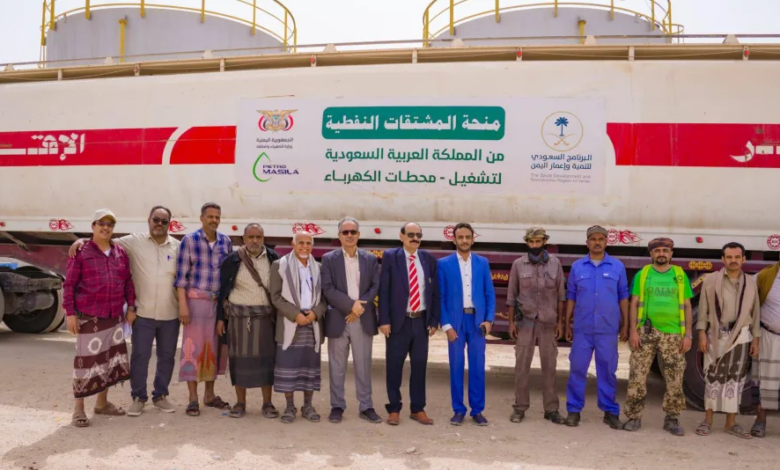

The energy sector in Yemen has recently witnessed a significant improvement following the arrival of new shipments of Saudi oil derivatives, which have directly contributed to revitalizing the electricity grid in seven liberated Yemeni governorates. This step comes as a continuation of the brotherly support provided by the Kingdom of Saudi Arabia to Yemen, aimed at alleviating the suffering of citizens and ensuring the continued operation of vital facilities.
This grant is of paramount importance given the exceptional circumstances Yemen is facing, where the electricity sector suffers from dilapidated infrastructure and a severe fuel shortage due to the economic crisis and years of ongoing conflict. The arrival of diesel and fuel oil shipments for power plants has increased energy production capacity, positively impacting operating hours and reducing power outages, which had reached record levels, particularly in hot coastal areas like Aden and Hadramawt.
General context and the Saudi role in development
This grant is part of a package of projects and initiatives led by the Saudi Development and Reconstruction Program for Yemen (SDRPY), which aims to support the Yemeni economy and improve basic services. Historically, this is not the first time the Kingdom has intervened to rescue the electricity sector; it has previously provided numerous grants totaling hundreds of millions of dollars, contributing to the operation of more than 70 power plants and providing electricity to hospitals, schools, and government facilities, thus underscoring Riyadh's commitment to supporting Yemen's developmental and economic stability.
Economic and social impact of the grant
The impact of the fuel grant extends far beyond simply lighting homes; it encompasses broad economic and social dimensions. Economically, the availability of electricity helps maintain production in workshops and small factories, protects shops from losses due to spoilage, and reduces the strain on hard currency reserves that the Yemeni government was previously depleting to import commercial fuel. Socially, a stable electricity supply is crucial for the efficient operation of hospitals and health centers, and it alleviates the effects of high heat and humidity on residents of coastal governorates, thus contributing to social stability in those areas.
It is expected that the continued flow of these grants, in conjunction with administrative reforms in the Yemeni electricity sector, will lead to a gradual and sustainable improvement in service, paving the way for larger development projects in the near future.