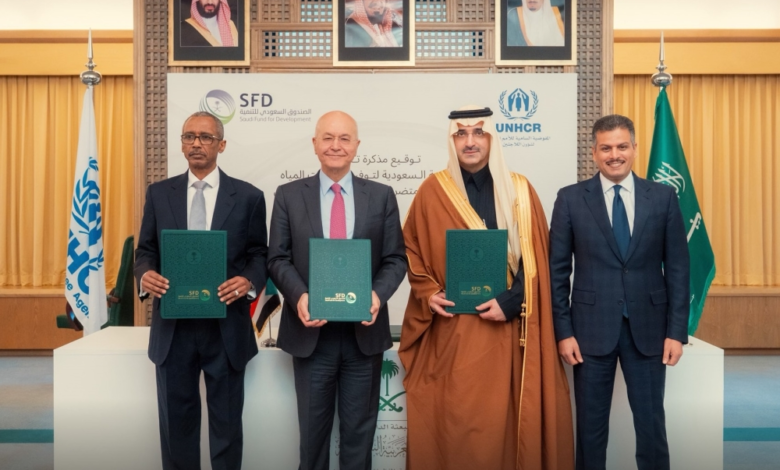
In a significant humanitarian and developmental step reflecting the depth of fraternal relations, the CEO of the Saudi Fund for Development, Sultan bin Abdulrahman Al-Murshid, signed a joint memorandum of understanding with the United Nations High Commissioner for Refugees (UNHCR), in the presence of the Ambassador and Permanent Representative of the Republic of Sudan to the United Nations and other international organizations in Geneva, Hassan Hamid Hassan, and the Permanent Representative of the Kingdom of Saudi Arabia, Ambassador Abdulmohsen bin Khathila. The agreement includes a generous grant of $10 million from the Kingdom of Saudi Arabia, channeled through the Fund, aimed directly at providing safe and sustainable water to communities affected by conflict in the sisterly Republic of Sudan.
Project details and strategic objectives
This ambitious agreement focuses on implementing a package of engineering and technical interventions to rehabilitate and expand Sudan’s main water networks. A top priority is improving the Nile River water supply system in the capital, Khartoum. The project goes beyond traditional methods, integrating clean energy solutions by converting pumping stations to solar power, ensuring operational continuity and reducing long-term operating costs. The agreement also aims to enhance the technical capabilities of local personnel, involve the community in resource management to guarantee the project’s sustainability, and facilitate access to clean water for the population—a crucial step in mitigating the risk of disease and epidemics and promoting public health.
The context of the water crisis in Sudan
This initiative comes at a time when Sudan faces significant challenges regarding its water infrastructure, exacerbated by ongoing conflicts and dire economic conditions. International reports indicate that the lack of safe drinking water is one of the most pressing challenges facing both internally displaced persons and host communities. The destruction or disruption of water stations in conflict zones often forces residents to rely on unsafe water sources, increasing the risk of outbreaks of waterborne diseases such as cholera. This gives the Saudi intervention added value that extends beyond financial support to include safeguarding the health security of Sudanese citizens.
The importance and impact of international partnerships
During the signing ceremony, Sultan Al-Murshid affirmed that this grant embodies the Kingdom of Saudi Arabia's unwavering commitment to supporting the brotherly Sudanese people, noting that access to safe drinking water is a fundamental pillar of health and quality of life. For his part, the United Nations High Commissioner for Refugees explained that this generous financial support not only addresses urgent needs but also strengthens communities' resilience and self-reliance, emphasizing that sustainable solutions in conflict zones require strong and sustained partnerships such as the one between UNHCR and the Saudi Fund for Development.
A long history of developmental contributions
It is worth noting that this agreement is not a recent development, but rather an extension of a strategic development relationship between the Saudi Fund for Development and the United Nations High Commissioner for Refugees (UNHCR) that has spanned more than 10 years. This partnership has resulted in the funding of 18 development projects in 8 different developing countries, with a total value exceeding $85 million, benefiting more than 5 million people worldwide. This long-standing cooperation reflects a shared vision for achieving the Sustainable Development Goals and supporting the most vulnerable peoples and communities to enable them to live in dignity and stability.