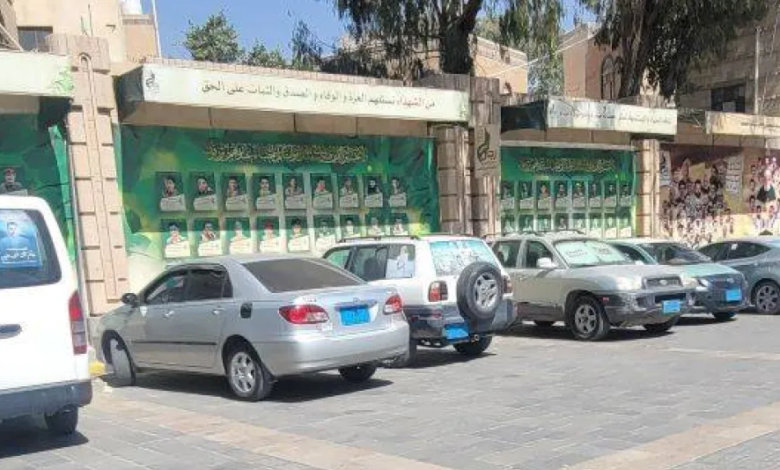

The Yemeni capital, Sana'a, which is under the control of the Houthi group, is witnessing an unprecedented proliferation of images of those killed on various battlefronts, highlighting the group's escalating human losses. Street walls, lampposts, and the facades of public buildings have been transformed into open-air galleries displaying photos of fallen fighters, a scene that reflects the heavy toll of the ongoing war.
Indicators of human suffering in the capital
Local sources and observers in Sana'a confirm that the increasing number of daily funeral processions and posters mourning the dead of various military ranks clearly indicate the heavy losses the group is suffering on the active battlefronts. This rise in casualties is not limited to ordinary fighters but also includes prominent field commanders, posing significant challenges for the group in replenishing its ranks.
General context and historical background of the conflict
This tragic scene has its roots in the conflict that erupted after the Houthis seized control of the capital, Sana'a, in September 2014, and the subsequent intervention of the Arab coalition in March 2015. Since then, Yemen has become an open battlefield, where the group relies primarily on mass mobilization to compensate for its disparity in weaponry and military technology. The group has consistently employed a "human rush" strategy in battles, which typically results in large numbers of casualties.
Mobilization mechanisms and their social impact
To compensate for this loss, the group resorts to widespread recruitment campaigns targeting tribes surrounding Sana'a, as well as schools and summer camps. Numerous UN and human rights reports have documented the exploitation of children and their deployment in combat. These policies have led to a state of silent resentment within Sana'a society, where thousands of families have lost their sole breadwinner, exacerbating the humanitarian and economic crisis that the UN classifies as one of the worst in the world.
Future repercussions of the ongoing bleeding
Political and military analysts believe that the continued emergence of images of the dead in such large numbers carries grave implications for the future of the conflict. On the one hand, it reflects the group's insistence on the military option despite the losses, and on the other hand, it portends a long-term drain on Yemen's human resources, leaving profound demographic and social scars that may take the country decades to recover from. This human hemorrhage is not merely a matter of statistics; it represents a human tragedy unfolding in every neighborhood and street of Sana'a, as the country awaits a political solution to halt the cycle of death.