The leadership congratulates the exiled on Libya's Independence Day: calls for security and stability

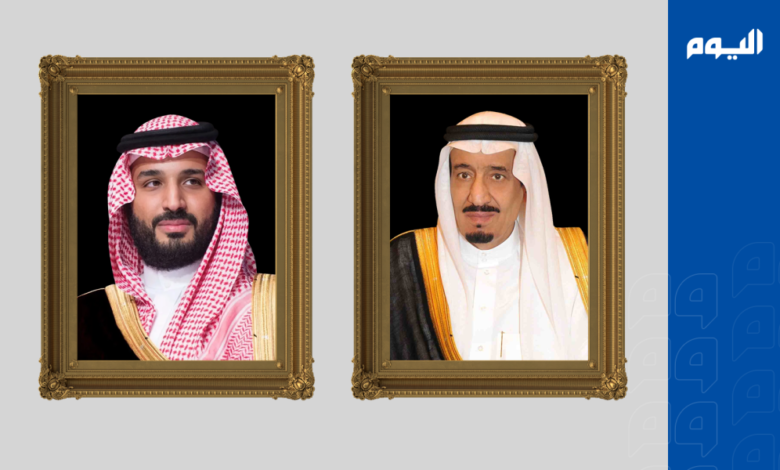
The Custodian of the Two Holy Mosques, King Salman bin Abdulaziz Al Saud, sent a congratulatory cable to His Excellency Dr. Mohammed Younis Al-Manfi, President of the Libyan Presidential Council, on the occasion of his country’s Independence Day, expressing his sincere congratulations and best wishes for continued health and happiness to His Excellency, and for further security and stability to the government and people of the brotherly State of Libya.
In the same context, His Royal Highness Prince Mohammed bin Salman bin Abdulaziz Al Saud, Crown Prince and Prime Minister, sent a similar congratulatory cable to His Excellency the President of the Libyan Presidential Council, in which His Highness expressed his best wishes for good health and happiness to His Excellency, and for continued security and stability to the government and people of the brotherly State of Libya, thus confirming the depth of the fraternal relations that bind the two countries and the two brotherly peoples.
The significance of timing and the importance of the message
The Saudi leadership's congratulations come at a crucial time for Libya. The carefully chosen words in the messages, particularly the emphasis on "security and stability," reflect the Kingdom of Saudi Arabia's unwavering commitment to Libyan unity and overcoming current challenges. This generous gesture underscores the Kingdom's steadfast support for political solutions that guarantee Libya's sovereignty and territorial integrity, and propel development and prosperity for the Libyan people as they aspire to build a promising future.
Independence Day: A pivotal historical milestone
Every year on December 24th, Libyans celebrate their country's Independence Day, a pivotal turning point in modern North African history. On this day in 1951, King Idris al-Sanusi declared Libya's independence from the balcony of the Manar Palace in Benghazi, thus establishing the United Kingdom of Libya as a sovereign state and ending decades of Italian colonialism followed by British and French administration after World War II.
This event holds particular international significance, as Libya was the first country in the world to gain its independence through a United Nations resolution (Resolution 289, issued in November 1949), making its independence a unique model in the history of international diplomacy and decolonization. The three regions (Cyrenaica, Tripolitania, and Fezzan) were then united to form the modern Libyan state.
Aspirations for the future
For the Libyan people today, Independence Day represents more than just a historical occasion; it is a symbol of national unity and shared identity amidst tireless efforts to bridge the political divide and achieve free and fair elections. The participation of brotherly nations, foremost among them the Kingdom of Saudi Arabia, in this event reaffirms Arab and regional support for the Libyan Presidential Council and for the efforts aimed at consolidating the foundations of the state and its national institutions.