Localities
Dammam 19 degrees Celsius... Statement of maximum temperatures in some cities of the Kingdom

Dammam recorded 19 degrees Celsius, according to a report National Center for Meteorology on Maximum temperatures Tuesday.
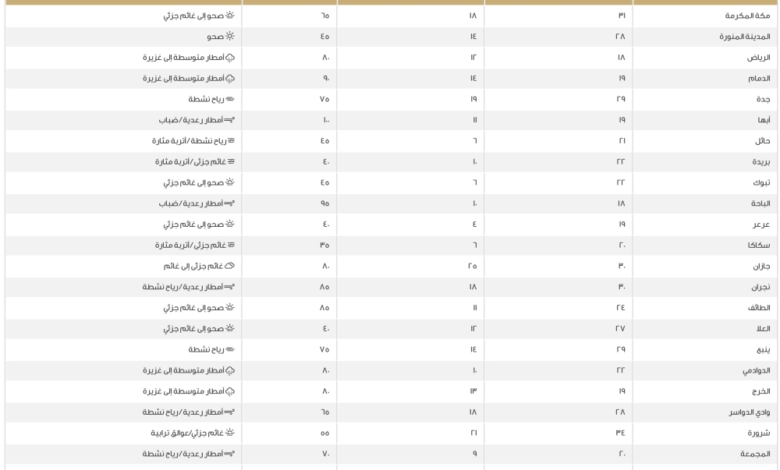
And it came Temperatures The maximum is as follows:
Dammam 19 degrees Celsius.
– Mecca, 31 degrees Celsius.
– Medina, 28 degrees Celsius.
Riyadh 18 degrees Celsius.
Jeddah – 29 degrees Celsius.
Abha 19 degrees Celsius.
Hail, 21 degrees Celsius.
– Buraidah 22 degrees Celsius.
Tabuk 22 degrees Celsius.
The courtyard is 18 degrees Celsius.
– Arar 19 degrees Celsius.
– Sakaka 20 degrees Celsius.
Jazan 30 degrees Celsius.
Najran – 30 degrees Celsius.
Taif – 24 degrees Celsius.
Al-Ula: 27 degrees Celsius.
Yanbu 29 degrees Celsius.
Al-Dawadmi: 22 degrees Celsius.
And it came Temperatures The maximum is as follows:
Dammam 19 degrees Celsius.
– Mecca, 31 degrees Celsius.
– Medina, 28 degrees Celsius.
Riyadh 18 degrees Celsius.
Jeddah – 29 degrees Celsius.
Abha 19 degrees Celsius.
Hail, 21 degrees Celsius.
– Buraidah 22 degrees Celsius.
Tabuk 22 degrees Celsius.
The courtyard is 18 degrees Celsius.
– Arar 19 degrees Celsius.
– Sakaka 20 degrees Celsius.
Jazan 30 degrees Celsius.
Najran – 30 degrees Celsius.
Taif – 24 degrees Celsius.
Al-Ula: 27 degrees Celsius.
Yanbu 29 degrees Celsius.
Al-Dawadmi: 22 degrees Celsius.
Al-Kharj: 19°C.
Wadi Ad-Dawasir: 28°C.
Sharurah: 34
°C Al-Majma'ah: 20°C.
Al-Wajh: 24°C. Rafha
: 20°C. Al-Qurayyat
: 19°C. Tarif: 18°C.
Al-Qunfudhah: 30°C
. Al-Ahsa: 19°C. Hafr Al-Batin: 21°C.
Bisha: 29°C.
As-Sawda: 14°C.
Rawdat At-Tanhat: 19°C.
Ad-Dahna Desert: 19°C.
As-Summan: 19°C.