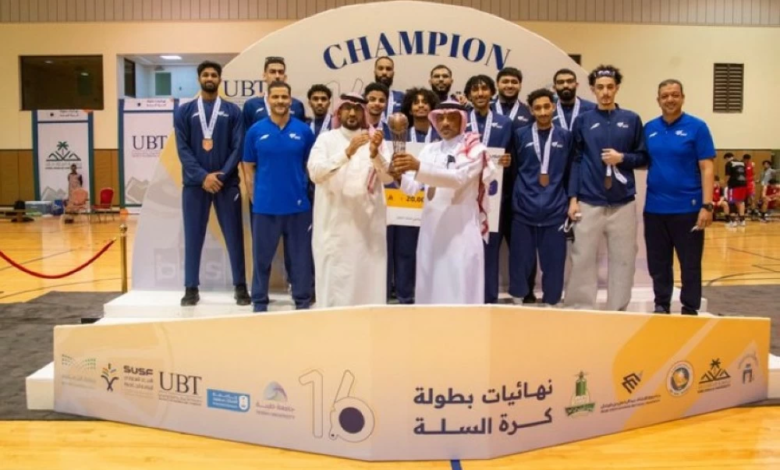
The Islamic University wins the Saudi Universities Basketball Championship – Season 16

In a highly competitive and enthusiastic atmosphere, the Islamic University of Madinah concluded the finals of the Saudi Universities Basketball Championship, as part of the 16th sports season of the Saudi Universities Sports Federation. The university hosted the tournament over three consecutive days, during which the sports hall witnessed intense matches featuring eight universities from across the Kingdom, all competing with great sportsmanship for the title.
Well-deserved crowning and advanced positions
The Islamic University team clinched the championship title and gold medals, deservedly securing first place after a thrilling victory in the final match, which showcased the team's high level of technical and physical preparation. Meanwhile, the King Abdulaziz University team finished second, earning silver medals, while the Imam Abdulrahman bin Faisal University team came in third, taking home the bronze medals. The matches were characterized by a high level of skill, reflecting the growing interest in sports activities within the university campus.
Historical context and the role of the University Sports Federation
This tournament is part of the Saudi Universities Sports Federation's calendar, which was established to organize and develop sports activities in higher education institutions. The continuation of these tournaments, now in their sixteenth season, is a testament to the success of the Federation's strategy in creating a sustainable competitive environment. Historically, university sports in Saudi Arabia have been the primary source for discovering talent that has supplied clubs and national teams in various sports, and basketball is one of the sports that enjoys growing popularity among students.
Strategic importance and its alignment with Vision 2030
The importance of this event extends beyond the competitive aspect, encompassing strategic dimensions that align with the Kingdom's Vision 2030, specifically the "Quality of Life" program. Through these championships, Saudi universities aim to promote sports as a healthy lifestyle among young people and develop sports infrastructure within their campuses. Furthermore, the Islamic University's hosting of this event in Madinah reinforces its leading role not only as an academic institution but also as a hub for athletic talent and youth activities.
Expected impact and future of university sports
This remarkable development in the level of university teams is expected to enhance the efficiency of the university league, making it a key feeder for the Saudi national basketball teams. The interaction between players from different regions of the Kingdom contributes to honing skills and exchanging technical expertise. Furthermore, the organizational success achieved by the Islamic University reflects the high administrative capabilities of Saudi educational institutions in managing major sporting events, paving the way for hosting regional and international university championships in the near future.