The Peace Winds exercise concluded in Oman with the participation of the Saudi naval forces

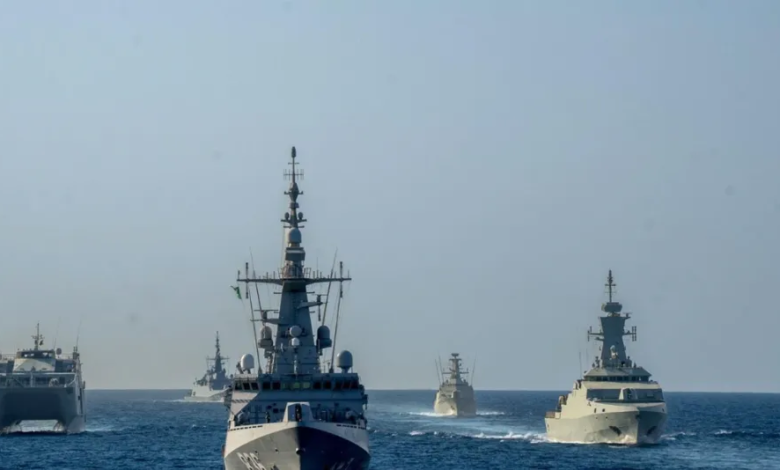
The Royal Saudi Naval Forces concluded their active participation in the bilateral naval exercise "Winds of Peace," held in the Sultanate of Oman, with the participation of several high-ranking military leaders from both sides. This exercise is part of the annual training plans aimed at enhancing combat readiness and exchanging military expertise between the Kingdom of Saudi Arabia and the Sultanate of Oman, thereby strengthening the capabilities of the armed forces in both countries.
Exercise objectives and procedures
The "Winds of Peace" exercises witnessed the execution of numerous joint naval and air military scenarios, focusing on enhancing command and control skills and standardizing joint operational concepts. The drills included search and rescue operations, intercepting suspicious vessels, addressing various maritime threats, and live-fire exercises. This type of exercise aims to refine the skills of naval and air crews and test communication and command systems under realistic operational conditions, thereby contributing to improved field coordination between the Saudi and Omani naval forces.
Strategic context and importance of the location
The “Winds of Peace” exercise is of paramount strategic importance due to the vital geographical location where the maneuvers were conducted. The maritime region surrounding the Sultanate of Oman, overlooking the Arabian Sea and the Indian Ocean, is of utmost importance to global trade and energy supplies. Therefore, enhancing maritime security in this region not only serves the interests of both countries but also contributes to the stability of the entire region and secures international shipping lanes against any potential threats, whether conventional or unconventional.
The depth of Saudi-Omani relations
This participation stems from the deep-rooted historical relations between the Kingdom of Saudi Arabia and the Sultanate of Oman, which are witnessing continuous development in all fields, particularly in the military and security sectors. These joint exercises reflect the sincere desire of the political leadership in both countries to strengthen the joint Gulf defense system and to work as a unified team to confront regional challenges. Bilateral exercises are a fundamental pillar in building mutual trust and understanding each other's military doctrines, thus facilitating joint operations during times of crisis.
Regional and international impact
Regionally, the success of Exercise Peace Winds sends a reassuring message to the countries of the region and the international community regarding the readiness of the Gulf naval forces and their ability to protect their territorial and economic waters. The exercise also underscores the commitment of the Gulf Cooperation Council (GCC) states to developing their self-defense capabilities and relying on national personnel trained according to the latest international standards. The continuation of such exercises strengthens the collective security system of the Gulf states and forms a strong bulwark against any attempts to destabilize the region, affirming that military cooperation is the optimal path to achieving lasting peace and prosperity.