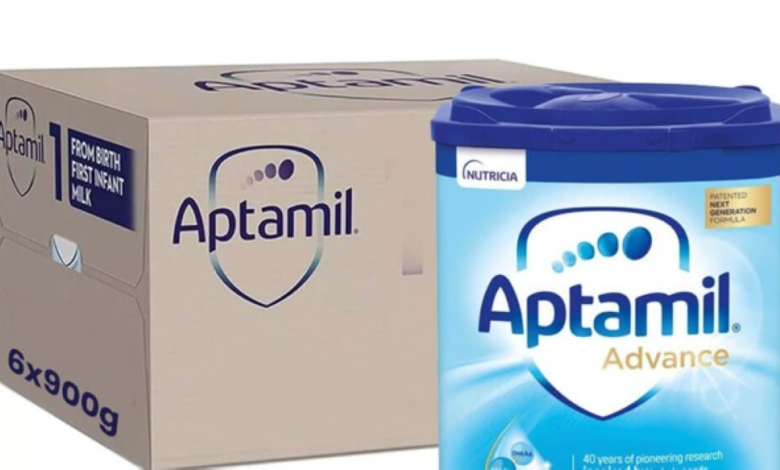
Food and Drug Administration: The recalled Aptamil Advance products did not enter Saudi Arabia

The Saudi Food and Drug Authority (SFDA) confirmed in a statement to Al-Youm newspaper that local markets are completely free of Aptamil Advance infant formula products, which were recently recalled in Kuwait. This confirmation aims to reassure consumers and parents in the Kingdom following reports of a recall of specific batches of the product in the neighboring country.
The authority clarified that the affected batches of the aforementioned product had not been cleared for or entered the Saudi market, emphasizing that all food products in circulation are subject to strict monitoring. The authority indicated that it continuously and meticulously monitors product safety across the Kingdom's various entry points and deals immediately and decisively with any product suspected of contamination or non-compliance with standards, in accordance with established regulations and rapid alert protocols.
Details of the draw in Kuwait and background of the event
These Saudi assurances come after the Kuwaiti Public Authority for Food and Nutrition announced last Sunday a food warning and a precautionary recall of the infant formula product "Aptamil Advance." The Kuwaiti decision was based on a report received through the Rapid Alert System for Food and Feed, indicating that the manufacturer, Danone, had implemented a voluntary and precautionary recall of a limited number of its products.
The Kuwaiti authorities explained that the recall pertains to products manufactured in Ireland bearing the brand name “Aptamil Advance”, due to the suspected presence of the substance “cereulide”, which is a toxic substance that may be secreted by certain bacteria, which necessitated taking immediate measures to preserve the health and safety of infants and children, and stopping the circulation of those specific batches in the Kuwaiti markets.
The role of the General Authority for Food and Drug in consumer protection
This event highlights the vital role played by the Saudi Food and Drug Authority (SFDA) through its effective monitoring and investigation systems. The SFDA relies on advanced mechanisms to monitor global supply chains and track international communications related to food and drug safety. This rapid response and clarification of facts are essential components of the SFDA's strategy to promote public health and prevent the spread of rumors that could cause anxiety among consumers.
The Authority is committed to applying the highest quality and safety standards to all food imports, especially those related to the nutrition of vulnerable groups such as children and infants. This official announcement underscores the efficiency of the Kingdom's regulatory systems and their ability to shield the local market from any potentially dangerous global products, thus reinforcing confidence in the Saudi food security system.