
For decades, Saudi Arabia, as the world's largest exporter of crude oil, has developed meticulous strategic plans to counter worst-case geopolitical scenarios. Amid recent tensions, and within hours of the initial US and Israeli strikes on Iran, which effectively closed the vital Strait of Hormuz, Riyadh swiftly activated a strategic contingency plan that had awaited implementation for 45 years. The aim was to maintain the flow of energy supplies to global markets and prevent a devastating economic crisis.
Historical background: A proactive vision since the 1980s
The roots of this strategic plan can be traced back to the 1980s, during the Iran-Iraq War and what became known as the "Tanker War." At that time, the Saudi leadership recognized the need to find an alternative route for oil exports that bypassed the vulnerable waters of the Arabian Gulf and the Strait of Hormuz. Consequently, the East-West crude oil pipeline, known as Petroline, was constructed as a vital artery connecting the giant oil fields in the Eastern Province, specifically Abqaiq, to the Red Sea coast.
A pivotal element at the heart of the conflict
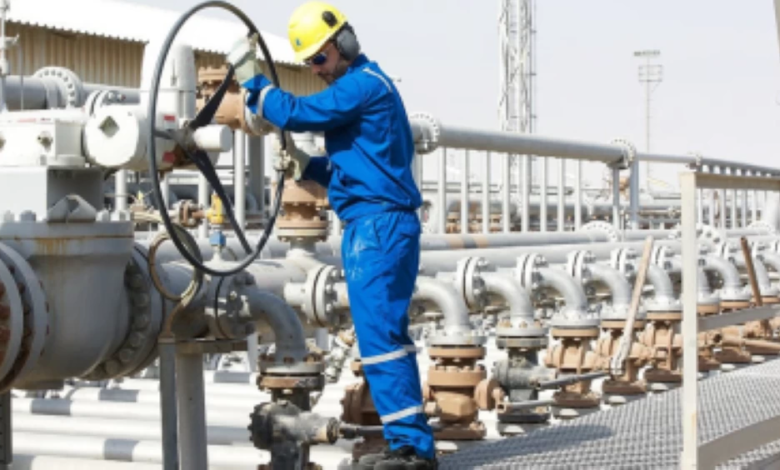
This massive pipeline stretches for approximately 1,200 kilometers across the Arabian Peninsula, reaching the port of Yanbu on the Red Sea coast. Today, Yanbu is a modern, sophisticated industrial city where a large number of supertankers converge to safely ship Saudi crude to European, American, and Asian markets, with more vessels arriving daily. According to ship-tracking data compiled by Bloomberg, crude exports from Yanbu surged to a five-day moving average of 3.66 million barrels per day on Friday, roughly half the Kingdom's total exports before the current crisis.
A safety valve for the global economy
The paramount importance of this pipeline lies in its role as a vital safety valve, mitigating the immense and escalating pressures on global oil supplies. Under normal circumstances, approximately 20 million barrels per day (equivalent to one-fifth of global oil consumption) pass through the Strait of Hormuz. With exports unable to transit the strait, some producing countries have been forced to reduce their output. However, Saudi Arabia, which has long presented itself as a key stabilizing force in energy markets, has utilized this strategic alternative to prevent runaway oil price spikes, thereby protecting the global economy from devastating waves of inflation.
A strategic strike and a message of reassurance
In this context, experts emphasize the geopolitical significance of this move. Jim Crane, an energy studies researcher at Rice University, says, “The East-West pipeline today looks like a brilliant strategic coup. The entire global economy benefits from its operation.” He added, “Without this seamless alternative to the Strait of Hormuz, there would have been even more desperation in Trump’s calls for allied support,” referring to US President Donald Trump’s threat to give Iran a 48-hour ultimatum to reopen the strait or face strikes targeting its energy infrastructure.
For her part, Carol Nakhle, CEO of an energy consulting firm, believes the psychological impact of this pipeline is just as important as its material impact. She explains that simply having an alternative route helps calm markets because it reassures buyers that the region's exports are not completely cut off and that supplies will continue to flow despite the crises.