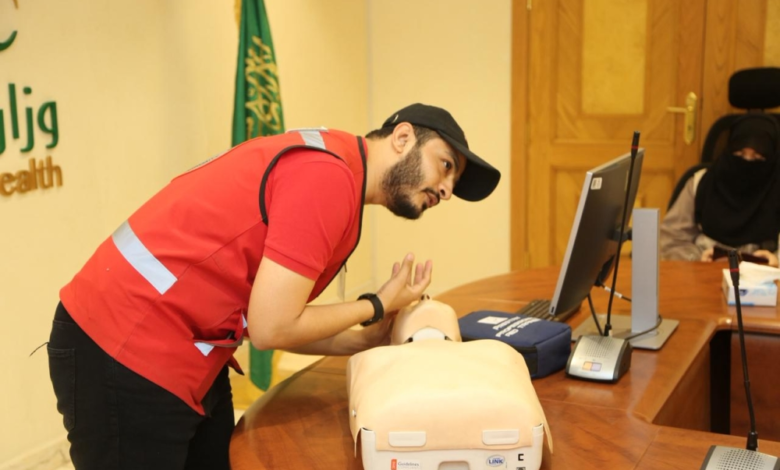
The Red Crescent in Mecca trains 108,000 beneficiaries in advanced ambulance programs

The Saudi Red Crescent Authority in the Makkah region achieved a significant leap forward in first aid awareness and training during 2025, successfully training and educating more than 108,000 beneficiaries. This achievement was made possible through a comprehensive training system encompassing 1,470 diverse programs aimed at enhancing community preparedness, instilling a culture of first aid, and improving emergency response efficiency across various vital sectors, in line with the goals of the Kingdom's Vision 2030 to enhance quality of life and achieve a vibrant society.
Strategic context and national vision
These intensive efforts are part of the Saudi Red Crescent's strategy to reduce emergency response times, not only through specialized ambulance teams but also by empowering community members to be first responders. These programs are of paramount importance in the Makkah region in particular, given the high population density and the influx of millions of pilgrims and Umrah performers, making the dissemination of first aid awareness an urgent necessity to ensure the safety of both pilgrims and residents.
The "Ambassador of Life" and "Golden Minutes" programs
The Authority's annual statistical report revealed details of the implemented programs, with the "Ambassador of Life" program leading the way by training 12,459 participants through 675 intensive courses. In a related context, the "First Eight" first aid program achieved a remarkable milestone, training 22,508 beneficiaries through 413 courses. This program focuses on the concept of the "golden minutes"—the critical first minutes after an injury or cardiac arrest—where immediate and correct intervention significantly increases survival rates and reduces complications before the arrival of an ambulance.
Enhancing safety in the Grand Mosque and educational facilities
The Authority paid special attention to the environment of the Grand Mosque in Mecca, training 3,861 staff members to serve pilgrims and Umrah performers with high efficiency, thus enhancing the health security system within the mosque. In parallel, the Authority focused on the school environment by training 2,880 beneficiaries through the School Paramedic Program. To ensure the sustainability of knowledge, 105 health supervisors (male and female) in the education departments of Jeddah, Mecca, and Taif were trained through the Central Trainer Program, forming a core group to transfer expertise within schools.
Call for community participation
The training methods varied, including in-person courses, workshops, awareness booths, and remote training, reaching all segments of society and both the public and private sectors. The Authority reaffirmed its commitment to continuing this awareness approach to enhance public safety, urging all citizens and residents interested in acquiring life-saving skills to register for the available courses through the "Mutaheb" online platform, contributing to saving lives and strengthening community solidarity.